

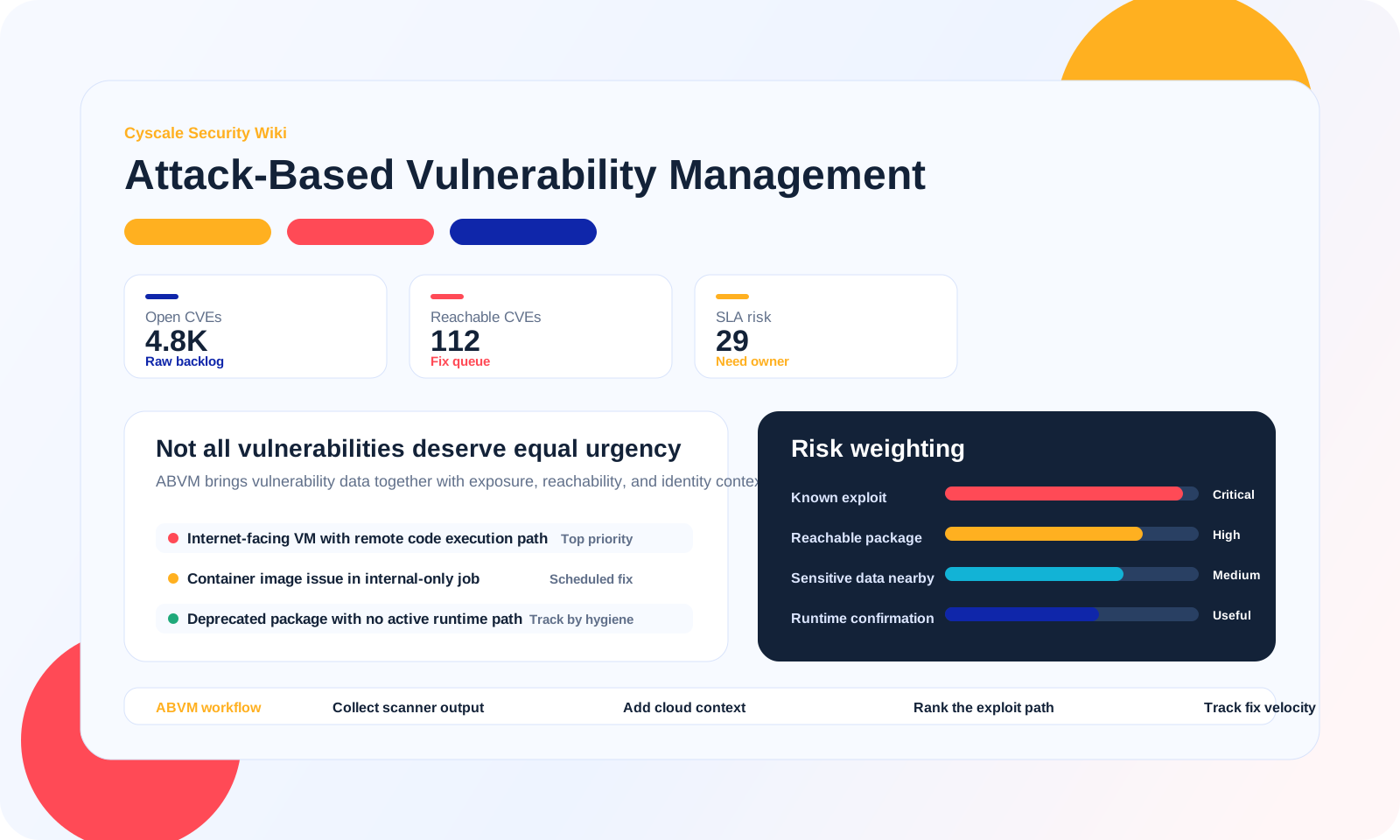
Traditional vulnerability management creates enormous backlogs because it treats scanner output as the final answer. ABVM takes the opposite view: scanner output is only the starting point.
The real goal is to identify which vulnerabilities are likely to matter in your environment based on how a workload is exposed, what it can access, and whether attackers could realistically use the issue to move forward.
Where classic vulnerability management breaks down
Flat vulnerability queues make it easy to count problems and hard to reduce risk. Teams end up patching by score alone, even when the highest business risk sits deeper in the queue.
- -Severity alone does not show whether a workload is reachable.
- -Patch cycles often ignore whether a vulnerable package is tied to a critical service.
- -Backlogs grow because teams lack a defensible way to say what can wait.
What ABVM adds
ABVM combines vulnerability data with the conditions that make exploitation practical. It is a better fit for cloud-native environments where infrastructure, identities, and workload exposure change constantly.
- -Internet or network reachability.
- -Privilege paths and lateral movement potential.
- -Sensitive data proximity and business criticality.
- -Runtime evidence such as package usage or workload activity.
How teams should use it
ABVM is most effective when it feeds engineering-ready queues. The point is not to invent another score. The point is to produce a smaller set of work items that teams can actually close.
- -Start with reachable vulnerabilities on internet-facing or high-trust workloads.
- -Review packages attached to sensitive data paths even when the severity score looks moderate.
- -Measure whether ABVM lowers MTTR for the issues most likely to become incidents.
Key questions to ask
- -Can the platform distinguish between vulnerable assets and attackable assets?
- -Does the prioritization model include network exposure, identities, and business impact?
- -Can teams track the vulnerable backlog by true risk tier rather than only by CVSS?
- -Does the workflow support both cloud workloads and software supply-chain context?
What strong ABVM programs typically combine
- -VM, container, and Kubernetes vulnerability findings.
- -Package and SBOM-based software exposure.
- -Identity and trust context that changes blast radius.
- -Attack-path and runtime signals that refine priority.
How Cyscale operationalizes this
- -Cyscale helps teams move from raw vulnerability volume to contextual vulnerability reduction.
- -That means showing where a vulnerability sits in relation to exposure, identity reach, and high-value assets.
- -ABVM becomes an execution workflow rather than another disconnected dashboard.
FAQ
Is ABVM only useful for vulnerabilities with active exploits?
No. Known exploits are important, but ABVM is broader. It asks which weaknesses are realistically reachable and likely to cause business impact in your environment.
Does ABVM mean teams can ignore low-severity issues?
No. It means low-severity issues are evaluated in context. Some remain hygiene work, while others become urgent because of where they sit in the environment.


