

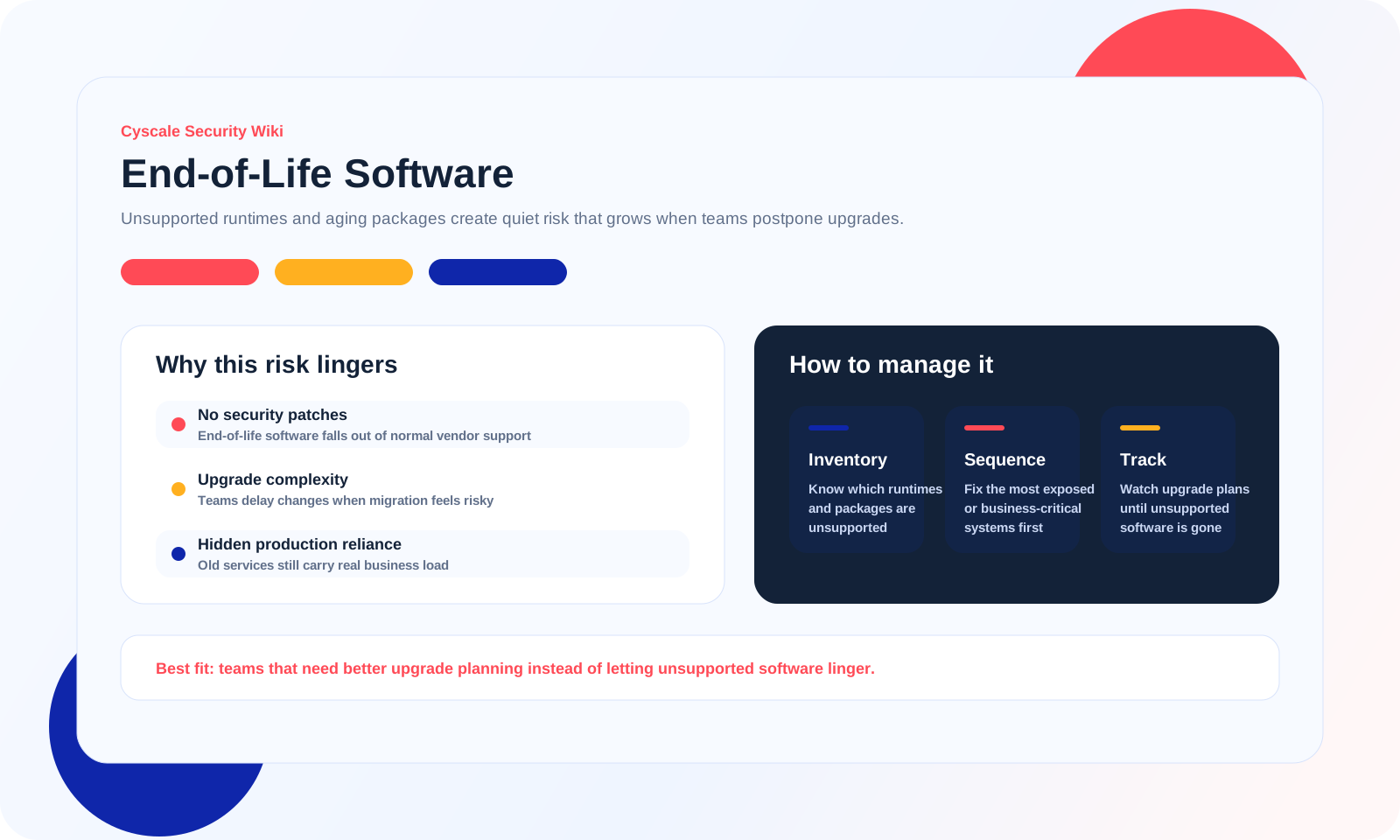
Unsupported software is risky even when it looks stable. Once vendor support ends, new vulnerabilities may go unpatched, compatibility declines, and security teams lose confidence in how long compensating controls will hold.
This is especially important in cloud-native environments where old base images, deprecated language runtimes, and forgotten services can persist for long periods without active ownership.
Key questions to ask
- -Can the platform identify unsupported software across repositories, containers, workloads, and cloud services?
- -Does it show which exposed or business-critical systems rely on those components?
- -Can teams track remediation plans and measure how quickly unsupported software is reduced over time?
- -Will the workflow surface approaching support deadlines early enough to avoid emergency upgrades?
What end-of-life tracking should include
- -Language runtimes, frameworks, operating systems, and base images that are past or nearing vendor support dates.
- -Dependencies and platform components that remain deployed even after official fixes stop arriving.
- -Production inventory so teams can tell which business services still depend on unsupported software.
- -Upgrade planning signals such as replacement versions, owner mapping, and environmental exposure context.
Signals mature teams rely on
- -Runtime and package inventory is the foundation because teams cannot replace unsupported software they have not mapped clearly.
- -SBOM-based visibility helps identify unsupported components inside build artifacts and container images.
- -EOL tracking should be linked to vulnerability, posture, and workload-criticality data so upgrades are prioritized rationally.
- -The strongest programs track vendor support dates continuously rather than treating unsupported software as an annual cleanup project.
How Cyscale operationalizes this
- -Cyscale helps teams place end-of-life software inside the same context used for vulnerability, exposure, and cloud-risk decisions.
- -This helps engineering teams prioritize upgrade work where unsupported software affects the most important workloads first.
- -Security leaders gain a clearer narrative for why unsupported software is a real risk even before a critical CVE appears.
FAQ
Is end-of-life software only a patching problem?
No. It is also a governance, compatibility, and supportability problem because teams lose vendor fixes, guidance, and assurance once software is unsupported.
Can unsupported software still be low risk?
Sometimes, but that depends on exposure, compensating controls, and business importance. Teams should not assume it is safe by default.
Why does unsupported software stay in production so long?
Because ownership is often unclear, upgrade testing is hard, and many teams lack continuous inventory that shows where outdated components still run.


