

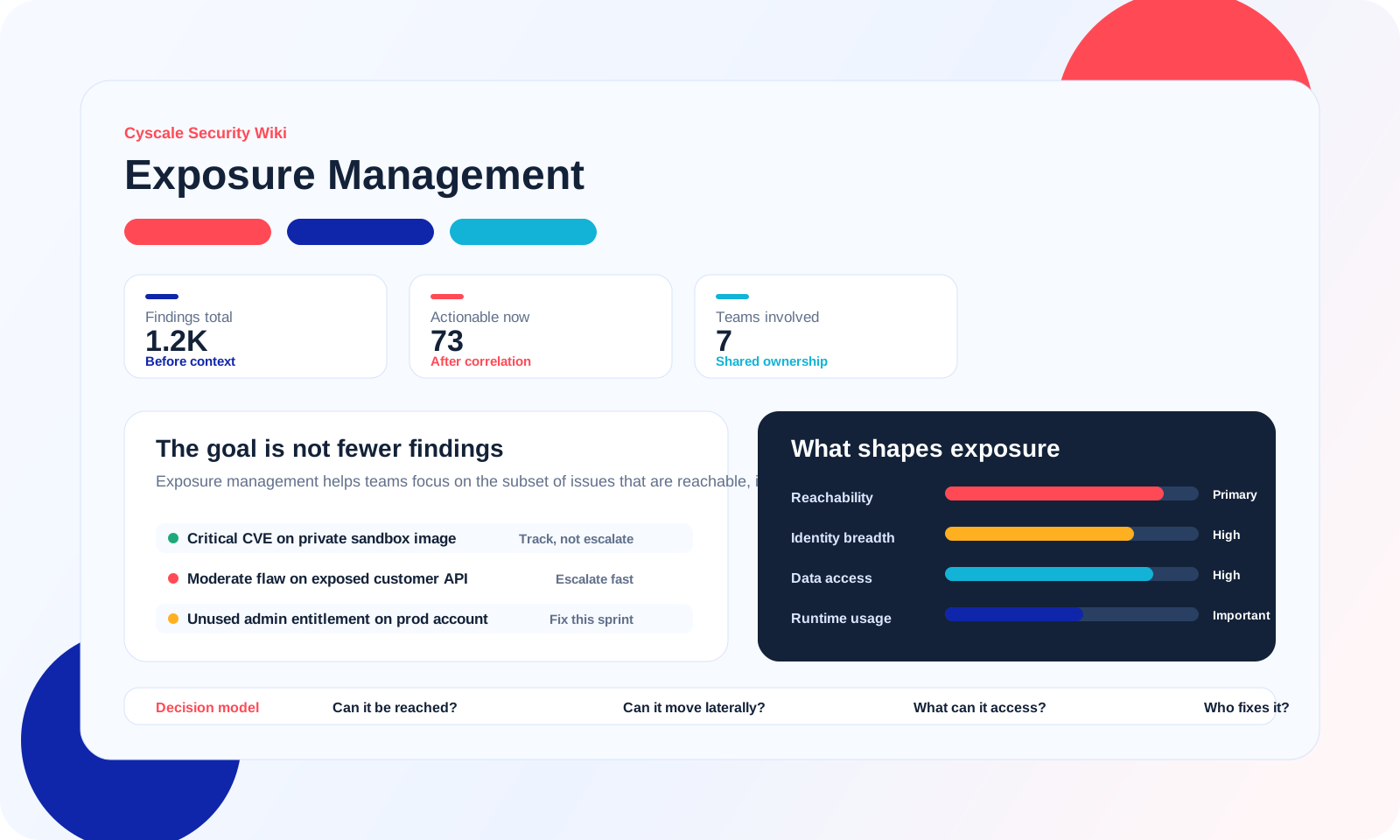
Exposure management exists because severity alone is rarely enough. Teams need to know whether a vulnerability or misconfiguration is reachable, who can abuse it, and what sits behind it if it is exploited.
That is why good exposure management combines security signals rather than treating each scanner or control family as its own isolated program.
Why flat severity queues fail
A critical finding on a disconnected asset may be important for hygiene, but it is not always the highest business risk. Meanwhile, a medium-severity issue on a public, privileged, data-adjacent service may deserve immediate action.
Exposure management helps teams explain that difference in a way engineering, AppSec, and leadership can all follow.
- -Severity is useful, but it is not the same thing as exploitability.
- -Reachability changes urgency.
- -Identity and data context change business impact.
- -Ownership affects how quickly a fix can realistically happen.
What context usually matters most
The right context depends on the environment, but most teams benefit from a consistent set of questions that help rank cloud and code risk in business terms.
- -Can this asset or service be reached from the internet or from another risky zone?
- -Do attached identities or trust paths increase blast radius?
- -Does the asset handle sensitive data or critical business functions?
- -Is the issue present in production, actively used, or confirmed at runtime?
How to make it operational
Exposure management is not a one-time scoring exercise. It is an operating model for triage, assignment, and verification.
The best teams build queues around exposure context so that remediation work looks more like product delivery and less like reactive fire drills.
- -Create fix-first queues based on exposure, not only scanner family.
- -Review high-impact exposures with service owners regularly.
- -Measure closure by reduced reachable risk, not just by closed tickets.
Key questions to ask
- -Can the platform show which findings are both reachable and impactful?
- -Does prioritization include identities, data, and runtime context?
- -Can teams see why one issue outranks another without reading raw scanner output?
- -Can the exposure story be turned into ownership and remediation tracking?
Core inputs into exposure management
- -Cloud posture and configuration drift.
- -Vulnerability and package-risk signals.
- -Identity reach, privilege breadth, and trust relationships.
- -Data sensitivity, business criticality, and runtime evidence.
How Cyscale operationalizes this
- -Cyscale connects posture, vulnerability, identity, and data context so teams can shrink the fix queue to what matters.
- -That improves how teams explain risk, assign owners, and measure whether remediation changed the exposure story.
- -Instead of separate backlogs by tool, teams get a more practical operating view.
FAQ
Is exposure management just a new name for prioritization?
Prioritization is part of it, but exposure management is broader. It includes the context collection, ownership model, and decision process that turns findings into a defensible remediation plan.
Can exposure management help reduce alert fatigue?
Yes. Teams reduce fatigue when they stop treating every alert as equally urgent and focus instead on the exposures that are reachable and consequential.


