

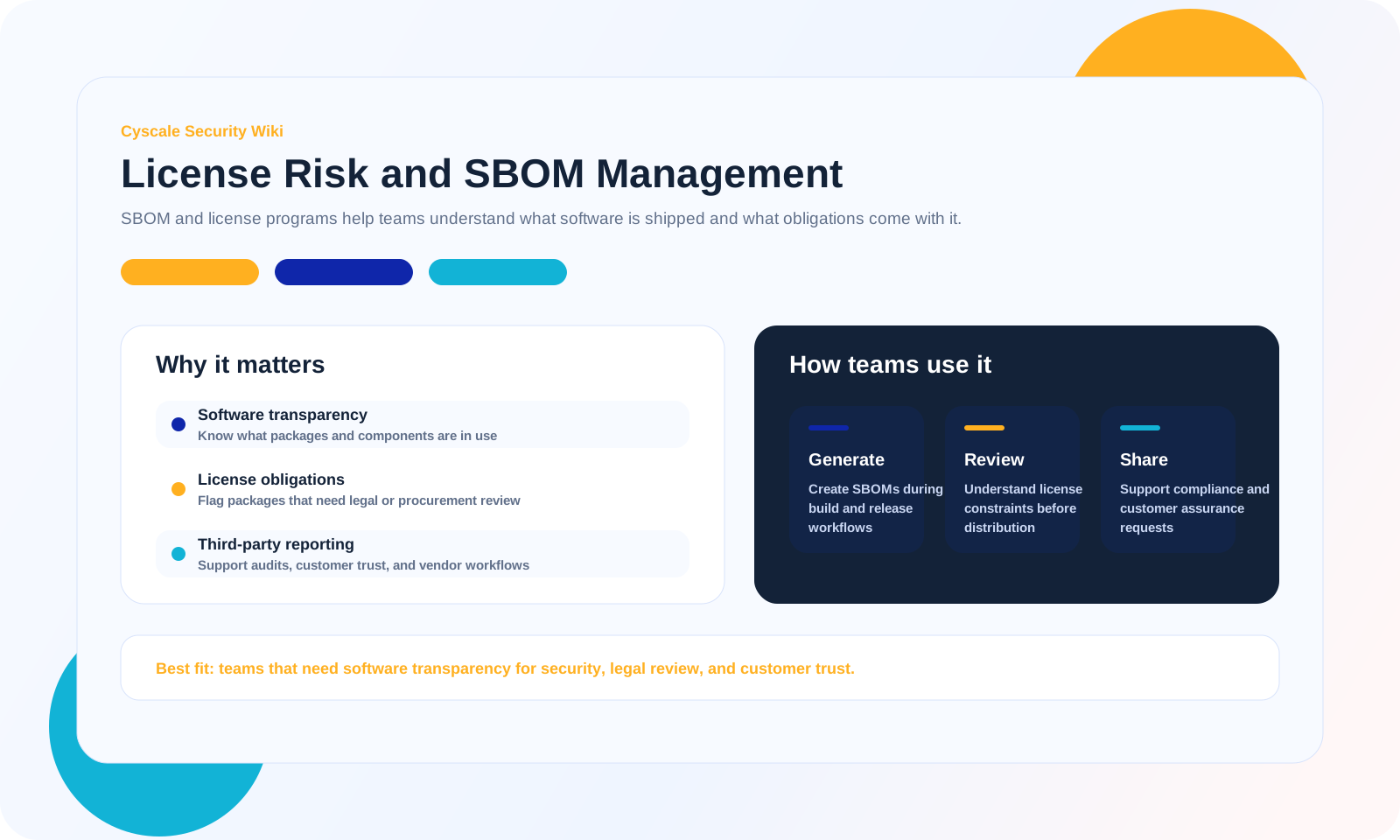
An SBOM gives teams a structured inventory of the components inside an application, container, or release artifact. That inventory supports vulnerability response, procurement review, customer assurance, and incident investigation.
License-risk review adds governance on top of that inventory. It helps teams identify packages whose licenses, provenance, or usage patterns create legal or policy concerns before those concerns spread across releases.
Key questions to ask
- -Can the platform generate reusable SBOMs automatically as part of normal build and release workflows?
- -Does policy handling cover license obligations, provenance concerns, and customer-requested inventory exports?
- -Can teams answer which software components were deployed at a specific point in time?
- -Is license governance tied to dependency remediation instead of handled as a separate manual process?
What a practical SBOM and license program should include
- -Continuous generation of software bills of materials for codebases, builds, and container images.
- -Policy checks for high-risk or restricted open-source licenses before release approvals are granted.
- -Inventory continuity so teams can answer which packages were present in a specific build or production deployment.
- -Governance workflows that connect dependency policy to engineering ownership instead of isolated legal spreadsheets.
Common tooling patterns in this category
- -AppThreat bundles cdxgen to produce SBOMs in standard formats that downstream teams and customers can reuse.
- -SBOM programs are strongest when they connect package inventory, vulnerability visibility, and license policy into one review workflow.
- -Teams should generate SBOMs for both source builds and container images so artifact tracking stays consistent.
- -License-risk review works best when policy decisions are versioned and visible to engineering, security, and compliance stakeholders.
How Cyscale operationalizes this
- -Cyscale helps teams use SBOM visibility as part of broader code-to-cloud risk and compliance workflows.
- -Dependency governance can be connected to vulnerability remediation, container visibility, and audit-ready reporting.
- -Security and engineering teams get clearer inventory continuity across repositories, artifacts, and deployed workloads.
FAQ
Is an SBOM only useful during incidents?
No. It is also useful for procurement, customer trust, compliance evidence, software governance, and routine dependency maintenance.
Does license review belong only to legal teams?
No. Legal input matters, but engineering and security teams need the same visibility so risky components are handled before release deadlines.
Can SBOMs help with cloud-native workloads?
Yes. SBOMs are especially useful in containers and fast-moving release pipelines where component inventory changes frequently.


