

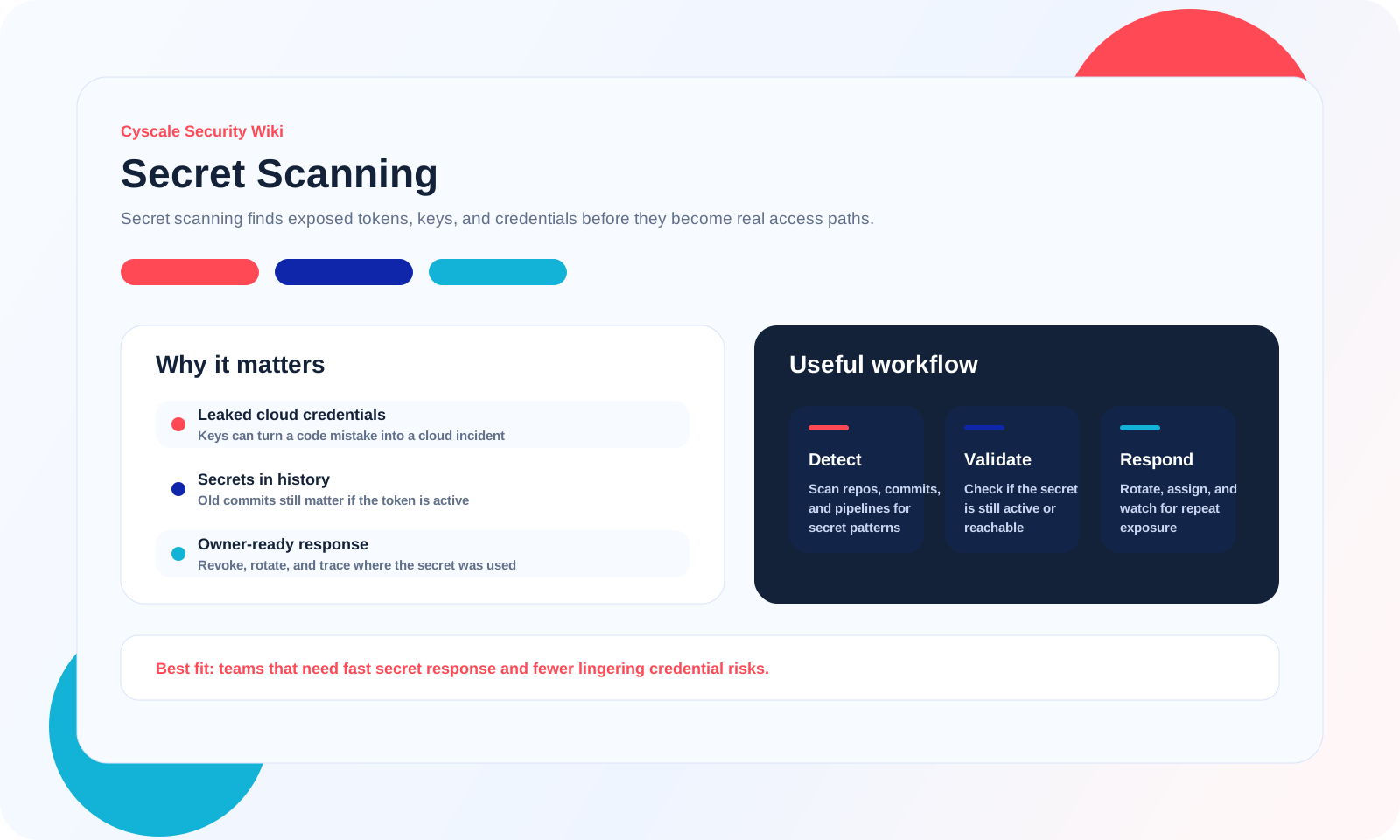
Credential exposure is one of the fastest ways for attackers to move from a small developer mistake to a cloud incident. Hardcoded keys, tokens in test files, leaked certificates, and secrets embedded in container layers all create immediate risk.
A strong secret-scanning program must do more than scan Git commits. It should cover pull requests, CI logs, IaC files, images, and historical repositories, then guide rotation and cleanup when leaks are found.
Key questions to ask
- -Can the scanner detect both newly introduced secrets and older leaks buried in repository history?
- -Does the workflow help teams rotate or revoke the exposed credential quickly?
- -Can secret findings be prioritized based on what systems or cloud roles the credential can access?
- -Is secret scanning extended to IaC, containers, and pipeline artifacts rather than limited to source code?
What secret-scanning programs should monitor
- -Repositories, pull requests, and historical commits for tokens, keys, passwords, connection strings, and certificates.
- -CI/CD pipelines, build logs, and artifact stores where credentials often appear by accident.
- -Infrastructure templates, Kubernetes manifests, and environment files that can expose production access.
- -Container images and packaged artifacts where secrets may remain even after code is cleaned up.
Common open-source secret-scanning patterns
- -AppThreat bundles Gitleaks, a widely used scanner for detecting hardcoded secrets in repositories and commit history.
- -Strong programs combine pattern matching with validation, ownership mapping, and secret-rotation workflows.
- -Detection should run pre-commit, in pull requests, and in continuous repository scans so teams catch both new and historical leaks.
- -Secret scanning becomes more useful when exposed credentials are tied to the cloud identities and services they can reach.
How Cyscale operationalizes this
- -Cyscale helps teams connect exposed credentials to cloud assets, identities, and workload context for faster incident prevention.
- -Secret findings can be reviewed alongside code, dependency, and infrastructure risk rather than in a silo.
- -Security teams get a clearer path from detection to rotation, cleanup, and long-term prevention.
FAQ
Is removing a leaked secret from the latest commit enough?
No. The credential should usually be rotated or revoked because it may already have been copied from history, logs, caches, or forks.
Can secret scanning create false positives?
Yes. That is why mature programs support validation, suppression, and ownership so teams do not ignore real leaks.
Does secret scanning matter for private repositories?
Yes. Private codebases still contain insider risk, pipeline leakage, accidental sharing, and compromise scenarios where exposed credentials matter.


