

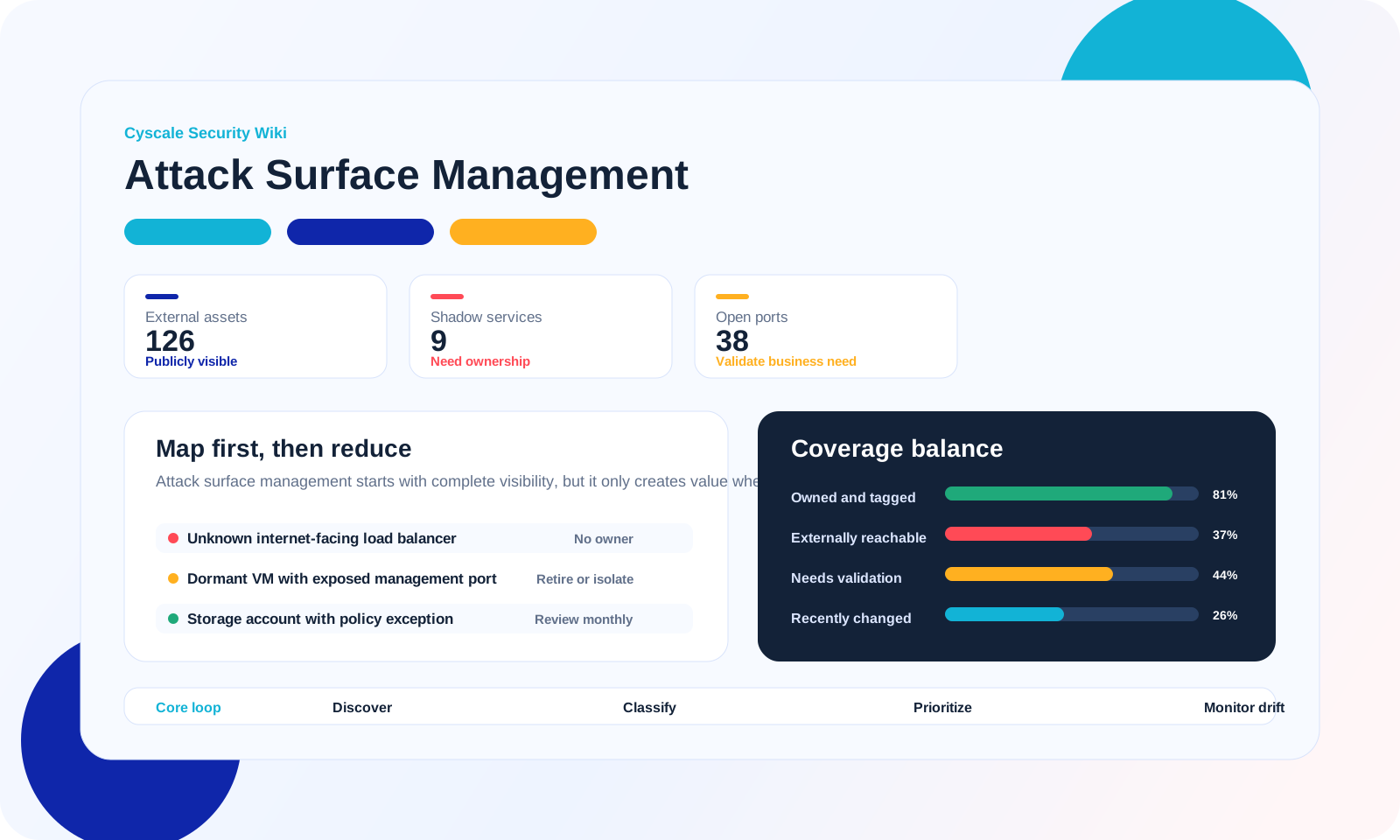
Attack surface management begins with discovery, but it cannot end there. Visibility alone does not reduce risk if teams cannot tell which assets are expected, which are risky, and which are simply forgotten.
In cloud environments, the attack surface changes constantly. New services appear, public routes are added, exceptions are granted, and old assets survive long after their owners forget them. That is why attack surface management has to be continuous.
What belongs in the attack surface
The attack surface is broader than public IPs. It includes applications, APIs, identity trust relationships, exposed management paths, storage assets, and the forgotten services that still accept traffic or hold data.
- -Internet-facing compute and containers.
- -Public storage, open databases, and exposed APIs.
- -Externally assumable roles, service principals, and trust relationships.
- -Shadow resources and dormant assets that still have reachable paths.
Why discovery alone is not enough
Many teams can produce a raw inventory of assets. The real challenge is deciding which assets matter, what should be public, and which findings deserve engineering time.
That means attack surface management has to include ownership, business context, and prioritization, not just discovery.
- -A public service with no business owner is a governance problem as well as a security problem.
- -A storage account may be reachable but still low priority if it contains no sensitive data and sits behind strong controls.
- -A forgotten VM with exposed management access may be more urgent than a well-managed application with compensating controls.
How strong teams run it
The best programs run attack surface management as a loop: discover, classify, reduce, and monitor. They do not wait for quarterly reviews to discover whether the footprint has changed.
This also means measuring reduction over time: fewer unknown assets, fewer unmanaged public entry points, and faster ownership assignment.
- -Track new internet-facing assets daily.
- -Review exceptions and public exposure by business owner.
- -Link exposed assets to vulnerability, identity, and data context before escalating.
Key questions to ask
- -Can you discover both expected and shadow assets across all connected environments?
- -Can you separate externally reachable assets from internal-only assets quickly?
- -Does the platform help assign ownership and review exposure decisions over time?
- -Can attack surface findings be correlated with vulnerability, identity, and data context?
What mature attack surface management should include
- -External-facing applications, APIs, and management interfaces.
- -Storage, databases, and data platforms with public or overly broad access.
- -Identity paths that extend exposure beyond one asset or account.
- -Continuous tracking of new assets, drift, and orphaned resources.
How Cyscale operationalizes this
- -Cyscale gives teams visibility into exposed cloud assets while keeping the surrounding context visible.
- -That helps teams decide whether an asset is simply visible, actually risky, or part of a larger exploitable path.
- -Ownership and remediation become easier because the exposure story is connected to the asset and its environment.
FAQ
Is attack surface management only about public assets?
No. External exposure is a major part of it, but internal reachability, trust paths, and forgotten assets also shape the effective attack surface.
How is attack surface management different from exposure management?
Attack surface management maps what is visible and potentially reachable. Exposure management goes further by identifying which of those conditions create practical risk worth fixing now.


