

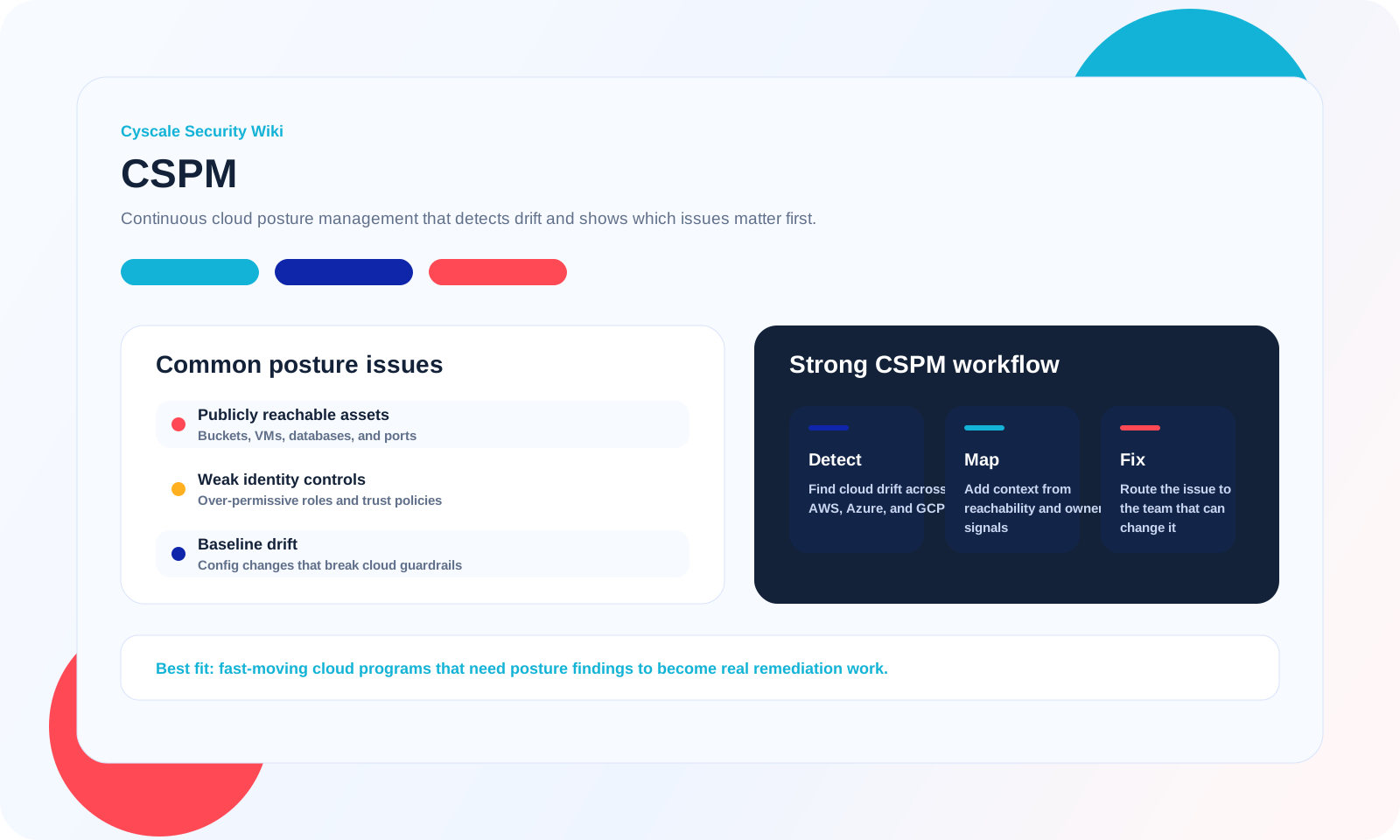
Cloud posture drift is inevitable in fast-moving environments. New services, permissions, and network rules can create hidden exposure in hours, not months.
CSPM must do more than generate findings. Effective platforms map posture issues to reachability, identity exposure, and workload value so teams know what to fix first.
Key questions to ask
- -How quickly can posture drift be detected across all cloud accounts?
- -Can posture findings be prioritized by real attack-path relevance?
- -Can teams assign ownership and track remediation status clearly?
- -Does the platform support continuous compliance evidence generation?
How Cyscale operationalizes this
- -Cyscale runs agentless posture checks across multi-cloud environments.
- -Policy findings are contextualized with identity and vulnerability signals.
- -Remediation workflows are structured for both technical teams and compliance stakeholders.
FAQ
Can CSPM help reduce audit preparation time?
Yes. Continuous posture monitoring creates a running evidence trail that reduces manual data gathering before compliance and audit cycles. It also helps auditors understand whether controls are current, scoped correctly, and tied to real cloud assets.
Does CSPM replace vulnerability management?
No. CSPM and vulnerability management are complementary. Teams should combine both with identity, workload, Kubernetes, data, and AI context for full cloud risk coverage.
Does CSPM include AI service posture?
CSPM principles apply to AI services, but AI Security coverage needs additional inventory and relationship context for models, endpoints, agents, datasets, vector stores, AI BOM components, guardrails, and permissions.
Can CSPM policies be customized?
Yes. Modern CSPM should support custom controls and query-based checks so teams can enforce internal cloud standards, approved architectures, AI Security requirements, and compliance-specific rules.


