

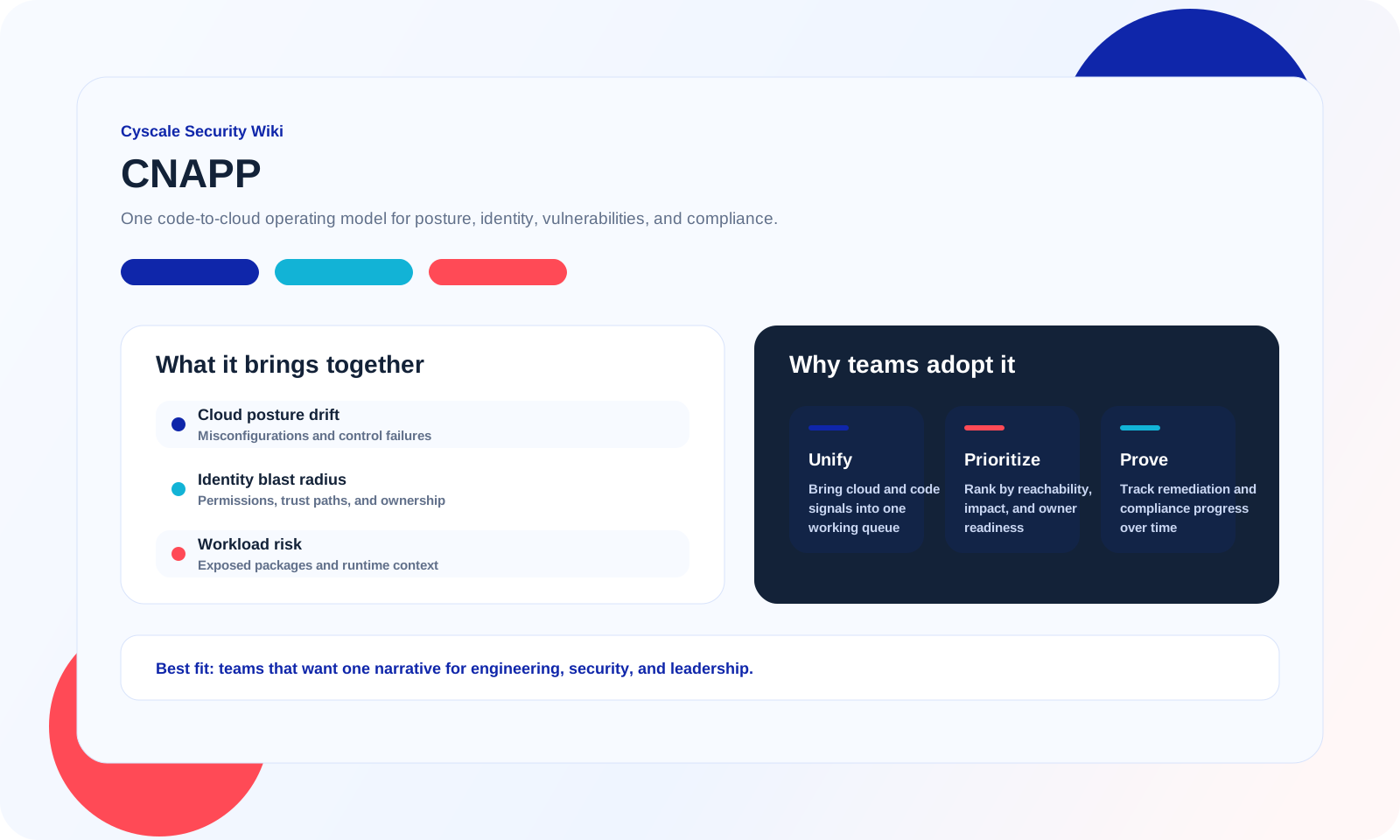
Most cloud security programs fail because tools are separated by lifecycle stage. Development, DevOps, cloud, and compliance teams see different risk signals and prioritize differently. CNAPP solves this by unifying context across those stages.
A practical CNAPP program should connect misconfigurations, vulnerabilities, identities, network exposure, and business criticality. Without this context, teams spend too much time triaging and too little time fixing.
Key questions to ask
- -Can the platform correlate code and cloud runtime findings in one workflow?
- -Does prioritization account for exploitability, exposure, and identity paths?
- -Can security, engineering, and leadership use the same risk narrative?
- -Is onboarding fast enough for small teams and scalable enough for enterprise growth?
How Cyscale operationalizes this
- -Cyscale unifies CNAPP controls across posture, vulnerability management, IAM risk, and compliance.
- -It scans repositories, images, Kubernetes, VMs, and cloud functions with SBOM-based analysis.
- -Findings are prioritized in context so teams focus on reachable and high-impact risk first.
FAQ
Is CNAPP only for large enterprises?
No. Mid-market and fast-growing companies benefit significantly because CNAPP reduces tool sprawl and gives lean teams one risk-prioritization workflow.
How is CNAPP different from CSPM?
CSPM focuses on posture and misconfigurations. CNAPP includes CSPM but adds workload vulnerability, identity risk context, and broader code-to-cloud workflows.


