

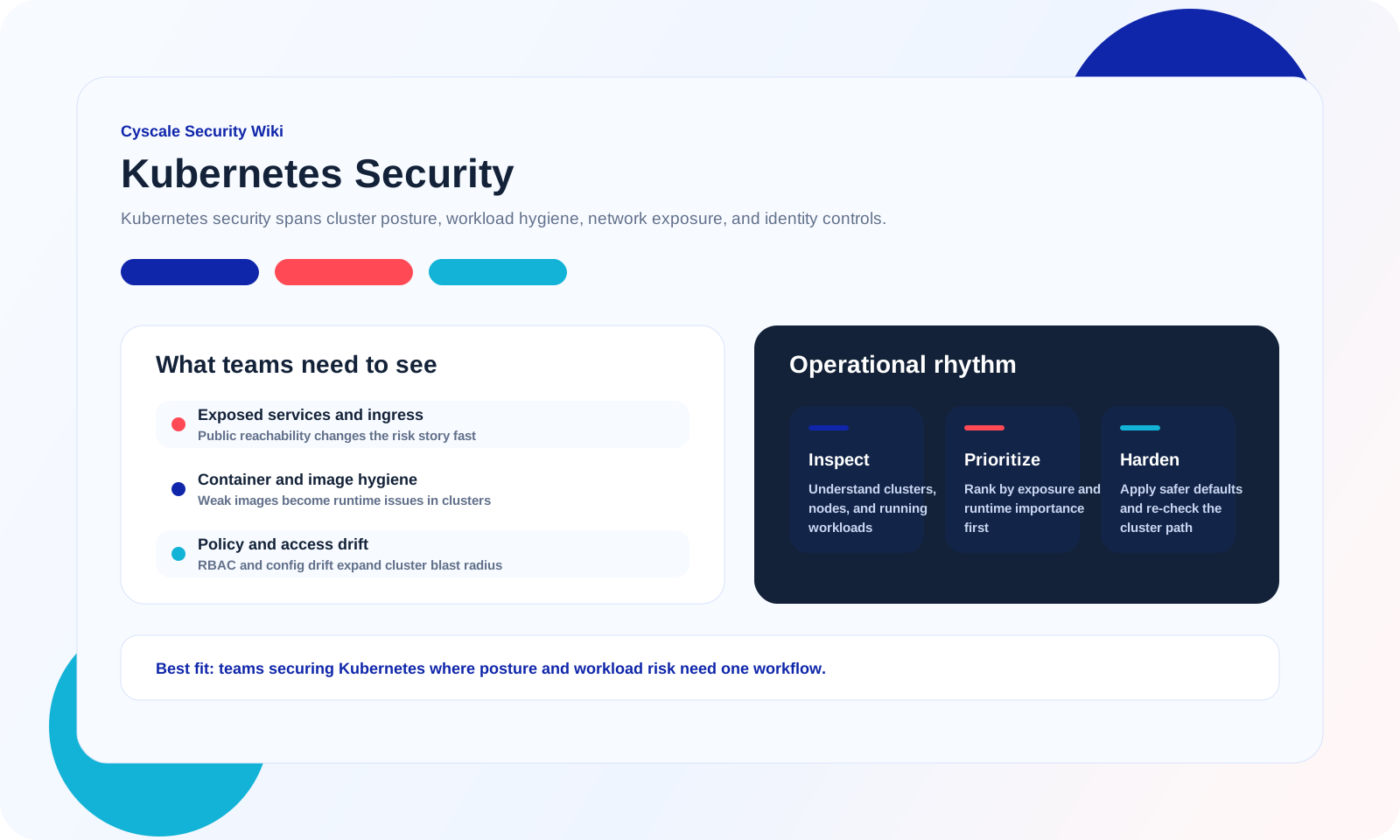
Kubernetes environments evolve quickly, and security controls can drift through frequent deployments, service changes, and role modifications.
A practical Kubernetes program combines image scanning, cluster posture checks, IAM context, and workload exposure to prioritize the highest-impact fixes.
Key questions to ask
- -Can security teams continuously monitor clusters and workloads without heavy agent overhead?
- -Are container vulnerabilities and cluster misconfigurations correlated in one triage queue?
- -Does the platform support remediation workflows for DevOps and platform teams?
- -Can findings be linked to broader multi-cloud risk context?
How Cyscale operationalizes this
- -Cyscale provides Kubernetes security posture and workload vulnerability visibility in one platform.
- -Image and runtime context are unified for prioritized remediation.
- -Kubernetes risk can be managed consistently alongside VM and serverless workloads.
FAQ
Is Kubernetes security mainly a runtime problem?
No. High-impact risk can originate in code, dependencies, infrastructure configuration, IAM, and runtime exposure together.
Can Cyscale help prioritize Kubernetes fixes?
Yes. Cyscale prioritizes K8s findings by context so teams focus on issues with the highest practical risk.


