

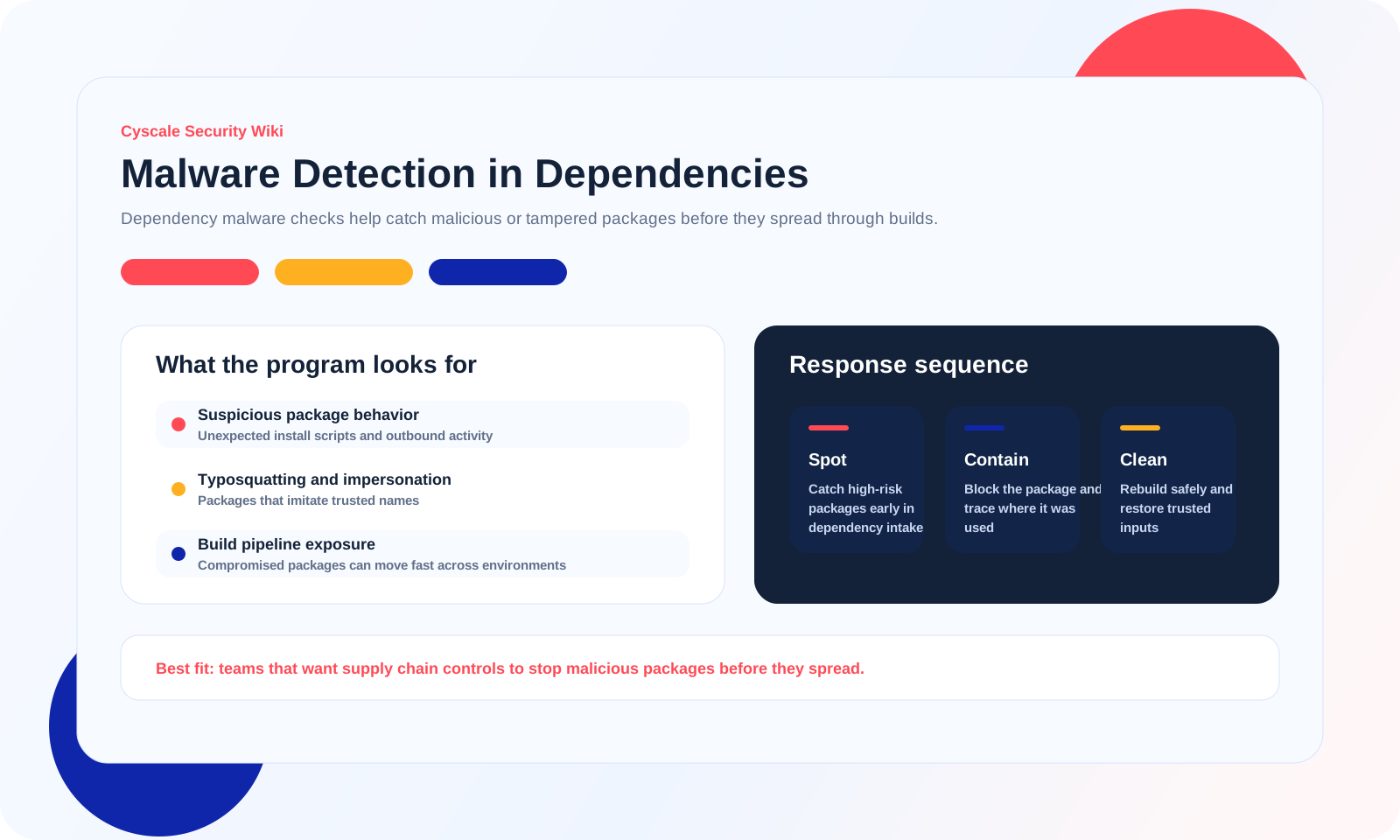
Not all dependency risk comes from known vulnerabilities. Some packages are malicious by design, while others become dangerous after maintainer compromise, suspicious updates, or typo-based impersonation.
That makes supply chain defense different from classic SCA. Teams need reputation signals, provenance checks, install-behavior review, and fast ownership mapping when a suspicious dependency enters the build.
Key questions to ask
- -Can the program distinguish malicious-package risk from standard CVE-driven vulnerability management?
- -Does it provide enough artifact and ownership context to drive rapid containment if a bad package is discovered?
- -Can teams trace suspicious dependencies into container images, builds, and deployed workloads?
- -Will the workflow support preventive policy controls as well as incident response?
What dependency-malware programs should monitor
- -Typosquatting and lookalike packages designed to trick developers into installing the wrong dependency.
- -Packages with suspicious install scripts, credential theft behavior, or unexpected network activity.
- -Maintainer, publisher, or provenance changes that increase trust risk for previously accepted dependencies.
- -Dependencies that spread malicious files, binaries, or post-install actions into containers and production artifacts.
Signals mature teams use in this category
- -Package reputation and provenance checks help teams identify suspicious publishers and unexpected dependency lineage.
- -Install-script review is critical because many malicious packages execute harmful behavior before the application even runs.
- -SBOM and lockfile visibility help responders understand where a malicious dependency entered the build chain.
- -Malware detection becomes more actionable when teams can see which images, services, and cloud assets inherited the same package.
How Cyscale operationalizes this
- -Cyscale helps teams connect software supply chain alerts with affected artifacts, workloads, and cloud exposure.
- -Security teams can investigate suspicious packages using the same platform context they already use for posture and vulnerability work.
- -This shortens response time when a malicious package affects live services or sensitive environments.
FAQ
Does normal SCA catch malicious packages automatically?
Not always. Traditional SCA is strongest on known vulnerabilities and inventory, while malicious-package detection needs reputation, provenance, and suspicious-behavior signals too.
Why is typosquatting so effective?
Because modern teams install many packages quickly, and a small naming mistake in a build or tutorial can pull in an attacker-controlled dependency.
Can malware in dependencies affect private applications?
Yes. Private internal services still build, deploy, and run software that can inherit malicious packages, then expose credentials or cloud access internally.


