

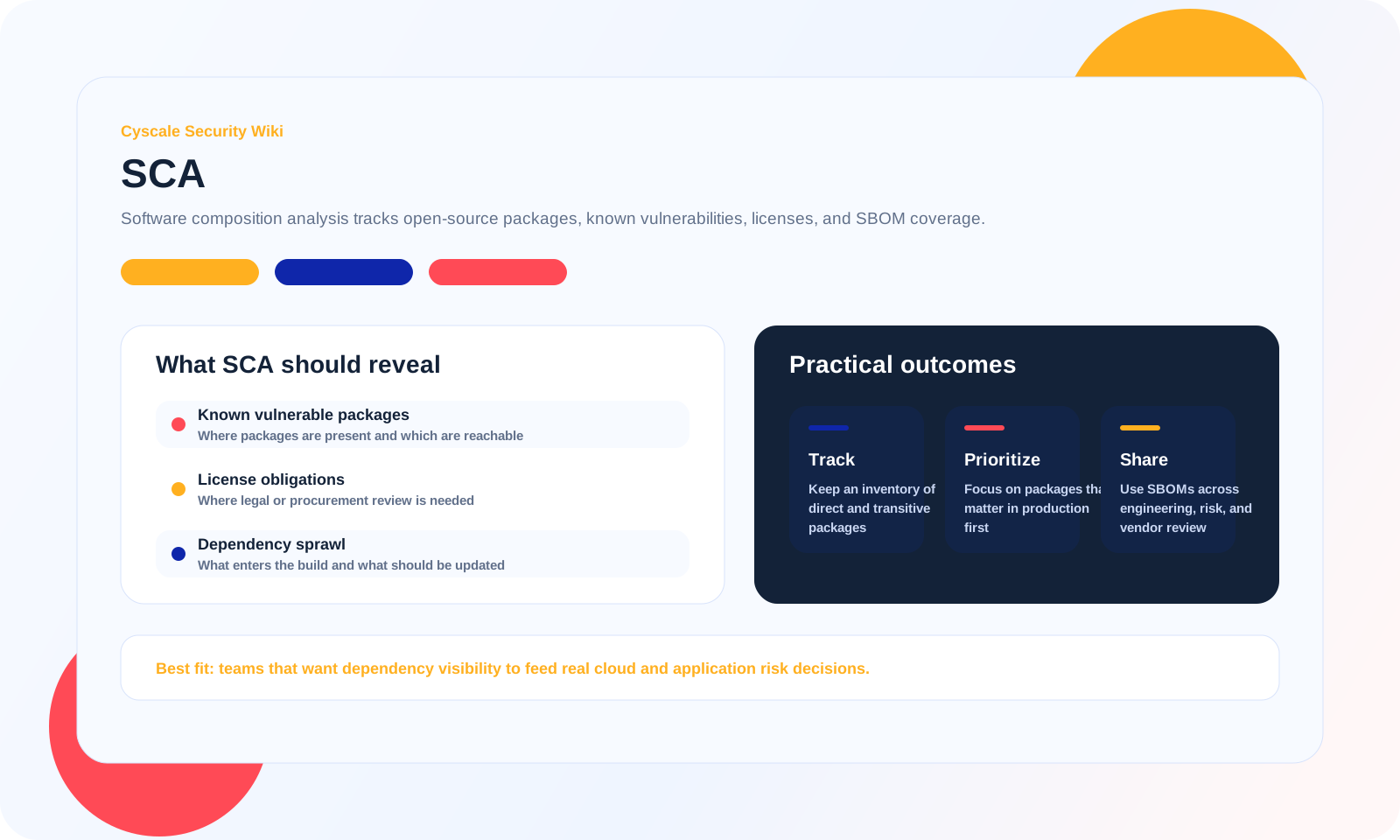
Most modern applications are assembled from open-source packages, frameworks, and base images. That means a large share of software risk sits in third-party components rather than custom code.
Modern SCA is more than matching package names to CVEs. It should map transitive dependencies, produce SBOMs, track fix versions, and show which vulnerable packages actually affect exposed workloads.
Key questions to ask
- -Can the platform scan lockfiles, manifests, containers, and build artifacts instead of only repositories?
- -Does it generate SBOMs in standard formats your teams can reuse?
- -Can it separate reachable, exploitable dependency risk from low-impact package noise?
- -Will engineering teams get clear upgrade paths, compensating control notes, and ownership routing?
What modern SCA should cover
- -Direct and transitive dependencies across package managers, build systems, containers, and serverless artifacts.
- -Known vulnerabilities, outdated libraries, and fix availability so developers know whether a practical upgrade path exists.
- -SBOM generation and inventory continuity across repositories, pipelines, and released artifacts.
- -Reachability and workload context so teams do not treat every vulnerable package as equally urgent.
Common open-source tooling in SCA programs
- -AppThreat bundles cdxgen for generating SBOMs across multiple ecosystems and artifact types.
- -It also bundles dep-scan to analyze dependency vulnerability exposure across package manifests and software bills of materials.
- -Strong SCA programs pair package inventory with fix intelligence, policy rules, and ownership mapping.
- -Dependency scanning becomes much more actionable when it is connected to containers, cloud functions, and live services.
How Cyscale operationalizes this
- -Cyscale correlates dependency findings with runtime exposure, cloud context, and remediation ownership.
- -SBOM-driven visibility helps teams understand what is deployed across repositories, images, and workloads.
- -Security and engineering can focus on packages that create real business risk instead of chasing raw CVE volume.
FAQ
Is SCA only for open-source licenses?
No. License policy is one part of SCA, but most teams also rely on it for vulnerability visibility, SBOM generation, and dependency lifecycle management.
Why is transitive dependency visibility important?
Many high-impact vulnerabilities are introduced indirectly through packages your developers never added by hand, so direct dependency lists are not enough.
Can SCA reduce remediation time?
Yes. It is most effective when it shows fix versions, package paths, and which deployed workloads are affected by the same dependency issue.


