

Environment

GitLab Code Security
Cyscale helps security and platform teams understand which GitLab findings affect running cloud workloads so remediation starts with real risk instead of abstract scan volume.
- Connect GitLab findings to running services and workloads.
- Reduce queue noise with real deployment context.
- Prioritize code and dependency fixes by cloud exposure.
Operational risk view
Bring GitLab findings closer to cloud reality

Connect GitLab pipeline and repository findings to the workloads, services, and runtime paths they affect so teams can triage and remediate with less noise.
Deployment-aware
triage that shows whether a GitLab issue reaches live workloads and exposed services
Cross-team clarity
for security, platform, and engineering teams working from the same findings
Less remediation noise
when code and package issues are ranked by cloud impact instead of scan volume
What Cyscale adds to GitLab-driven workflows
GitLab generates a large stream of findings across code, dependencies, pipelines, and release workflows. Cyscale helps teams decide which of those findings matter in production.
Deployment-aware triage
Understand which GitLab findings affect workloads that are active, exposed, or tied to important services.
Cross-team clarity
Give security, platform, and engineering teams one view of which findings matter and why.
Less remediation noise
Reduce backlog confusion by linking package and code findings to real cloud impact instead of treating every alert equally.
What you should expect
What you should expect from GitLab security workflows
If your team works in GitLab, you should expect pipeline findings to stay connected to deployed artifacts and runtime exposure, not just surface more issues earlier in the SDLC.
You should expect
Pipeline findings need deployment context
You should know which GitLab findings are present in real services, workloads, and environments before they create urgency.
You should expect
Priorities must be explainable
Your security team should be able to justify why an issue matters now using cloud exposure, service criticality, and ownership.
With Cyscale
Runtime and graph context
Cyscale uses runtime and graph-based cloud context to help teams review GitLab findings in a way that is cleaner for engineering and more defensible for security.
Deployment context
Understand which GitLab findings affect running services
GitLab environments generate a large stream of findings across code, dependencies, pipelines, and release workflows. Without cloud context, those alerts are difficult to rank and easy for engineering teams to postpone.
Cyscale helps teams connect GitLab findings to running services, exposed workloads, and cloud ownership. That makes it easier to focus on issues that could actually be exploited in the estate you operate today.
- Review GitLab findings together with runtime workload and service context.
- Understand whether package and code issues are present in deployed artifacts.
- Keep remediation planning focused on what is live and relevant.
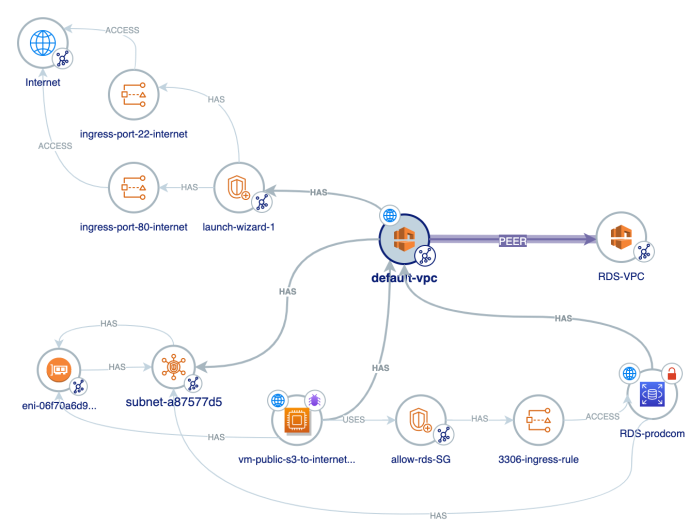
Use graph context to understand how a GitLab finding connects to workloads, identities, and cloud paths before it becomes a remediation priority.
Prioritization
Keep GitLab security queues focused and actionable
Security leaders need GitLab issues ranked by real business and cloud impact, not just by the volume coming out of pipeline checks. Otherwise engineering teams receive too much noise and too little context.
Cyscale helps teams move from GitLab alert to workload, owner, and remediation path faster so the queue stays smaller and the handoff stays clearer.
- Focus on findings affecting real services, exposed workloads, and sensitive environments first.
- Give security and engineering a common explanation for urgency.
- Shorten the path from finding to validated remediation.

Cloud-aware prioritization makes it easier to turn GitLab findings into a manageable remediation sequence instead of a broad, noisy backlog.
How teams use Cyscale with GitLab environments
The workflow keeps GitLab findings operational: unify them, prioritize them by runtime impact, and move them to the right teams with enough detail to close them cleanly.
Step 1
Bring GitLab findings into one view
Unify code and dependency findings with cloud workload context so teams do not manage separate silos.
Step 2
Prioritize what is deployed
Focus on findings that affect real services, exposed workloads, and sensitive environments first.
Step 3
Accelerate remediation
Move from GitLab alert to owner, workload, and remediation path faster with clearer cloud context.
Related playbooks and product flows
Use these pages to connect posture findings, CVE triage, AppSec signals, and remediation workflows across the broader Cyscale platform.
FAQ
Can GitLab findings be prioritized by cloud exposure?
Yes, when teams correlate GitLab-originating findings with the workloads and services actually running in cloud environments.
Why do GitLab security queues become noisy?
Because code and dependency findings often arrive faster than teams can validate deployment relevance, ownership, and real business impact.
Does Cyscale replace GitLab scanning?
No. Cyscale helps operationalize those findings by showing where they run, how exposed they are, and what should be fixed first.


