

Security Operations Use Case
Operational Security and Alert Triage
Cyscale helps teams run cloud security and code vulnerability work as an operational system, not just a list of findings, with clearer stages, better owner handoff, and stronger verification before closure.
- Turn cloud and code findings into visible operational work.
- Make blockers, ownership, and remediation state easier to understand.
- Verify closure instead of treating status changes as done.
Operational risk view
Move security work through a clearer operating model
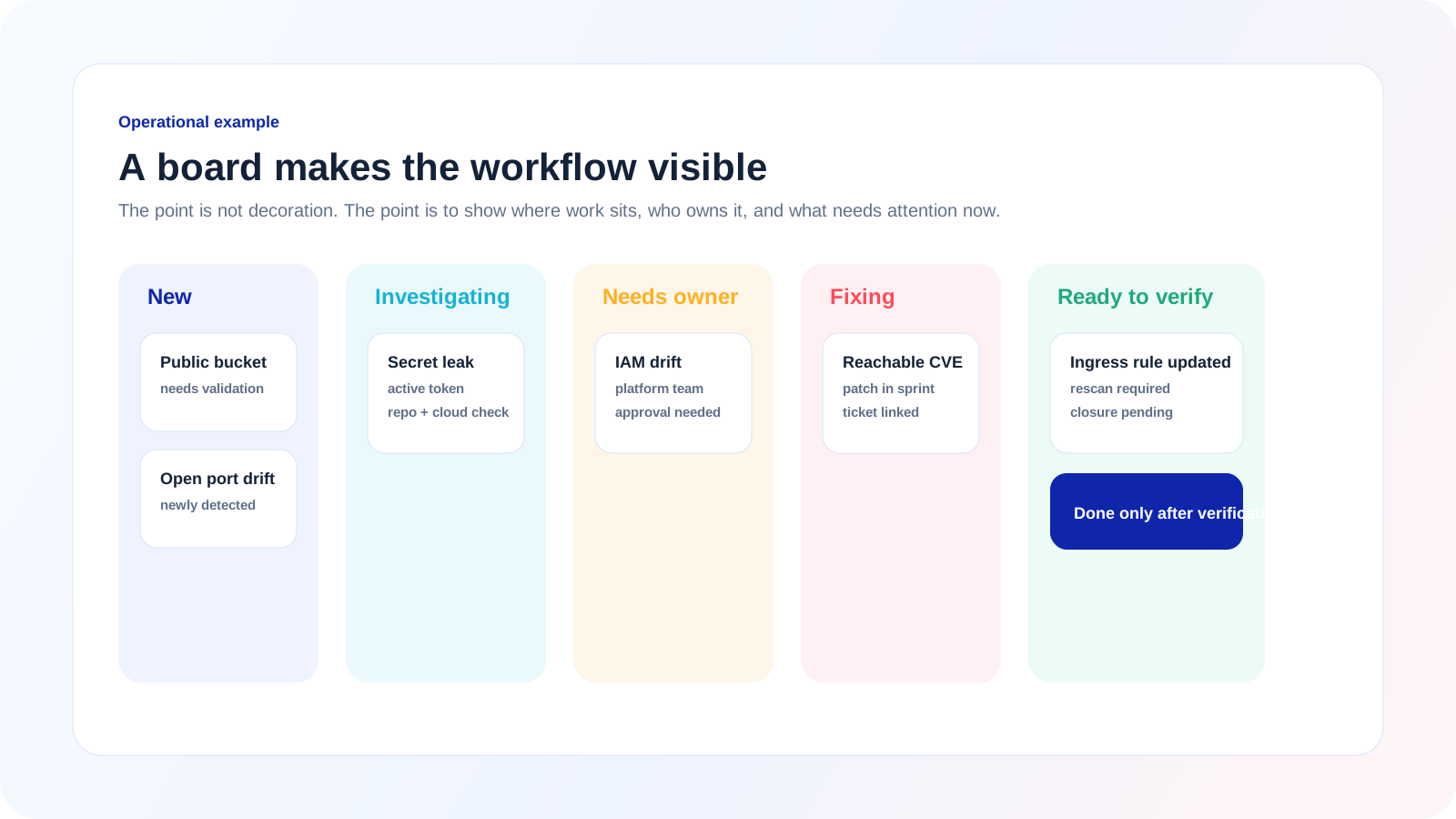
Turn posture alerts, investigation signals, and code-to-cloud findings into visible work with better status, ownership, and remediation discipline.
Clearer triage
when teams can see what is new, blocked, fixing, and ready to verify
Better ownership
because cloud, AppSec, platform, and engineering teams work from the same record
Stronger closure
when remediation is validated against the risky condition, not just the ticket state
What this workflow gives security teams
The strongest security operations workflows do more than display alerts. They help teams decide what matters, who owns it, what is blocking it, and whether the risk is truly gone.
Board-style execution
Move findings through meaningful stages such as New, Investigating, Needs Owner, Fixing, Ready to Verify, and Done.
Context-rich triage
Keep cloud exposure, service impact, runtime relevance, and code-to-cloud context on the card so teams can act faster.
Operational discipline
Track blockers, aging, and closure standards so the queue becomes easier to govern and easier to improve.
What you should expect
What you should expect from security operations
If you want triage to move faster, you need it to work like a real delivery system. That means fewer static queues, more visible workflow state, and better coordination between security and engineering.
You should expect
Visible execution state
You need more than open and closed. You need to know what is under review, blocked, fixing, or ready to verify.
You should expect
Shared security workflow
Your cloud security and code vulnerability workflow should support real handoff across security, platform, and engineering teams.
With Cyscale
Code-to-cloud operations
Cyscale connects alerts, investigation context, vulnerability data, and ownership so security work moves with less ambiguity.
Workflow visibility
Make the security queue behave like a work system
A flat table is useful for analysis, but it is weaker for daily execution. Security teams need to know what has not been reviewed yet, what is waiting on another owner, what is actively being fixed, and what still needs verification before it can be considered closed.
A board-style workflow makes those states visible so triage meetings end with decisions, not just refreshed filters and another export.
- Separate new findings from actively investigated work.
- Keep blocked issues visible so they can be escalated or unblocked.
- Use Ready to Verify as a real step before done.
The value is not the board by itself. The value is having a shared operating model that makes work state obvious.
Better cards
Give each alert enough context to drive the next action
A security board works only if the card itself explains why the issue matters. That means plain-language issue titles, affected asset or service, exposure context, ownership, and a clear closure expectation.
Without that, teams still have to leave the board to understand the work. With it, security, AppSec, cloud, and engineering teams can use the same item as the coordination point.
- Show service, repository, workload, or asset context directly on the card.
- Explain why the alert matters through exposure, blast radius, or runtime relevance.
- Make ownership and verification conditions explicit.
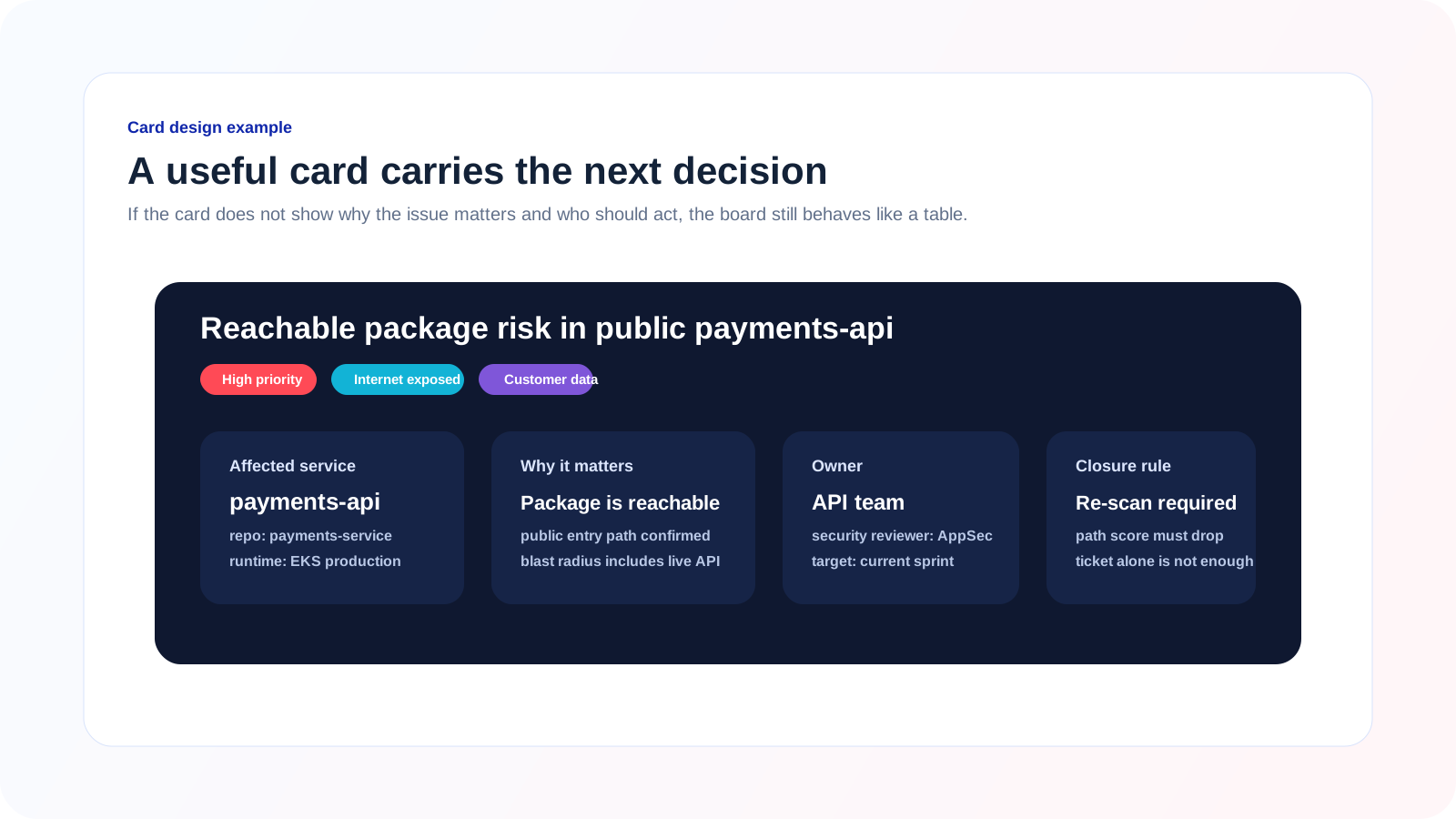
The stronger the card, the less time teams waste reconstructing the issue from disconnected systems.
Code-to-cloud operations
Use the same triage model for cloud findings and code vulnerability management
This workflow becomes especially valuable when code findings can be tied to cloud services and running workloads. A reachable package, an active secret, or a SAST issue in a live application path should not be handled like an isolated repository event.
Cyscale helps teams connect those signals to the affected runtime and the team that owns the fix, so the board becomes one coordination layer for cloud security and code vulnerability management.
- Bring SCA, SAST, DAST, secrets, and runtime context into one triage model.
- Help AppSec and engineering work from the same remediation record.
- Verify that fixes reduce the live path to risk before closure.
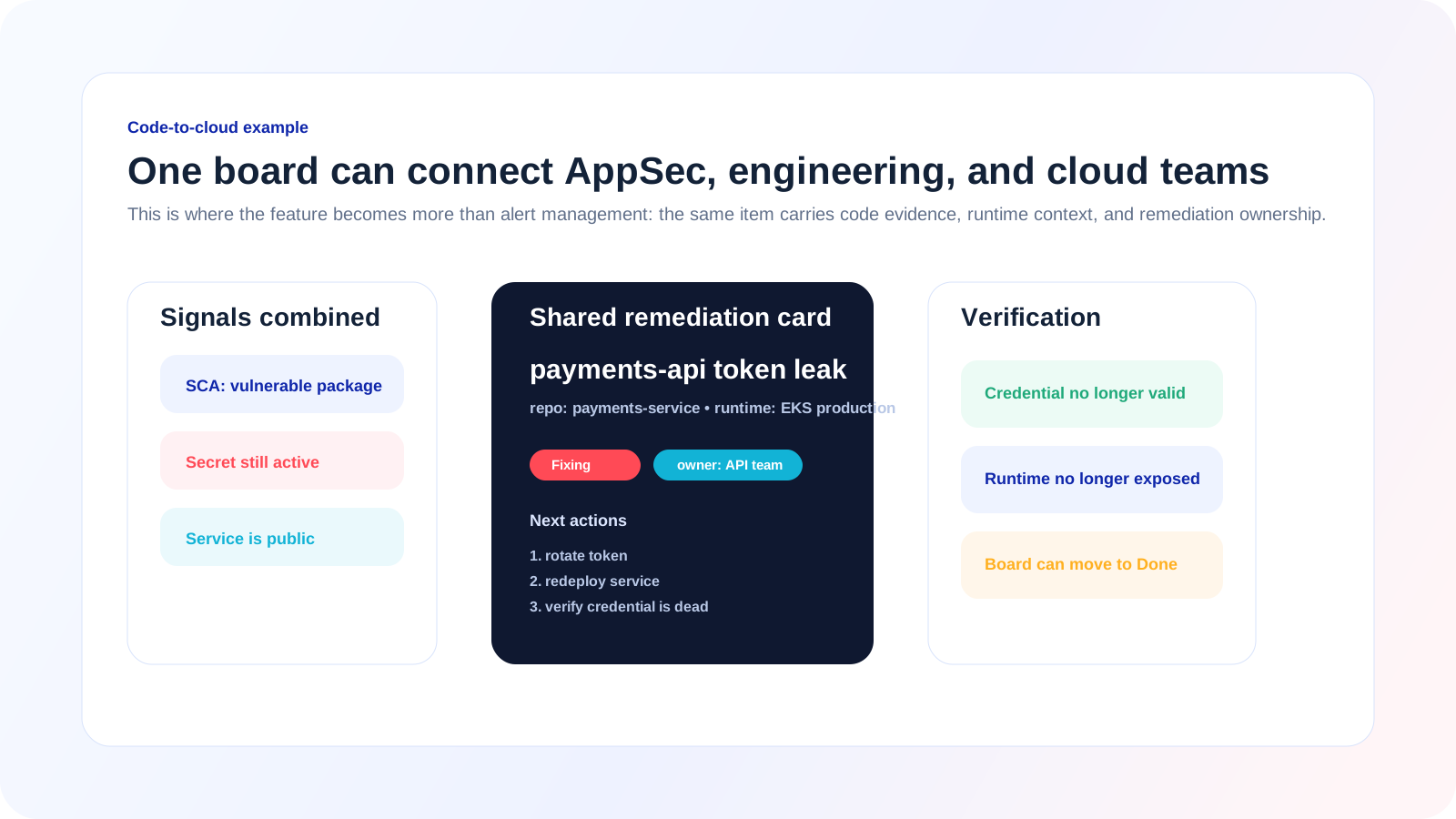
When findings are connected to deployed services and owners, the board becomes a real operating layer for remediation.
How teams run operational security with Cyscale
A practical model is simple: validate the issue, understand the context, assign it clearly, fix it, and verify that the risky condition is gone.
Step 1
Validate and investigate
Confirm that the finding is real, current, and relevant to a meaningful asset, workload, or service.
Step 2
Assign and unblock
Route work to the right owner, track blockers explicitly, and keep aging visible so stalled work does not disappear.
Step 3
Verify closure
Move issues to done only after the platform rechecks the condition and confirms that the risk path was reduced or removed.
Related playbooks and product flows
Use these pages to connect posture findings, CVE triage, AppSec signals, and remediation workflows across the broader Cyscale platform.
FAQ
Is this workflow only for cloud posture alerts?
No. It works well across posture findings, IAM issues, investigation-driven alerts, and code-to-cloud vulnerability workflows where multiple teams need to coordinate.
Why is a board-style workflow better than a table for triage?
Because it makes work state visible. Teams can see what is new, blocked, fixing, or ready to verify instead of treating everything as equally open.
Does done just mean the ticket was closed?
No. The strongest model treats done as verified closure, where the risky condition was rechecked and the relevant path to impact was reduced or removed.


