

APIs are now the main control plane for many products and cloud services. They expose business logic, sensitive data, and privileged actions in ways that are often harder to review than classic web pages.
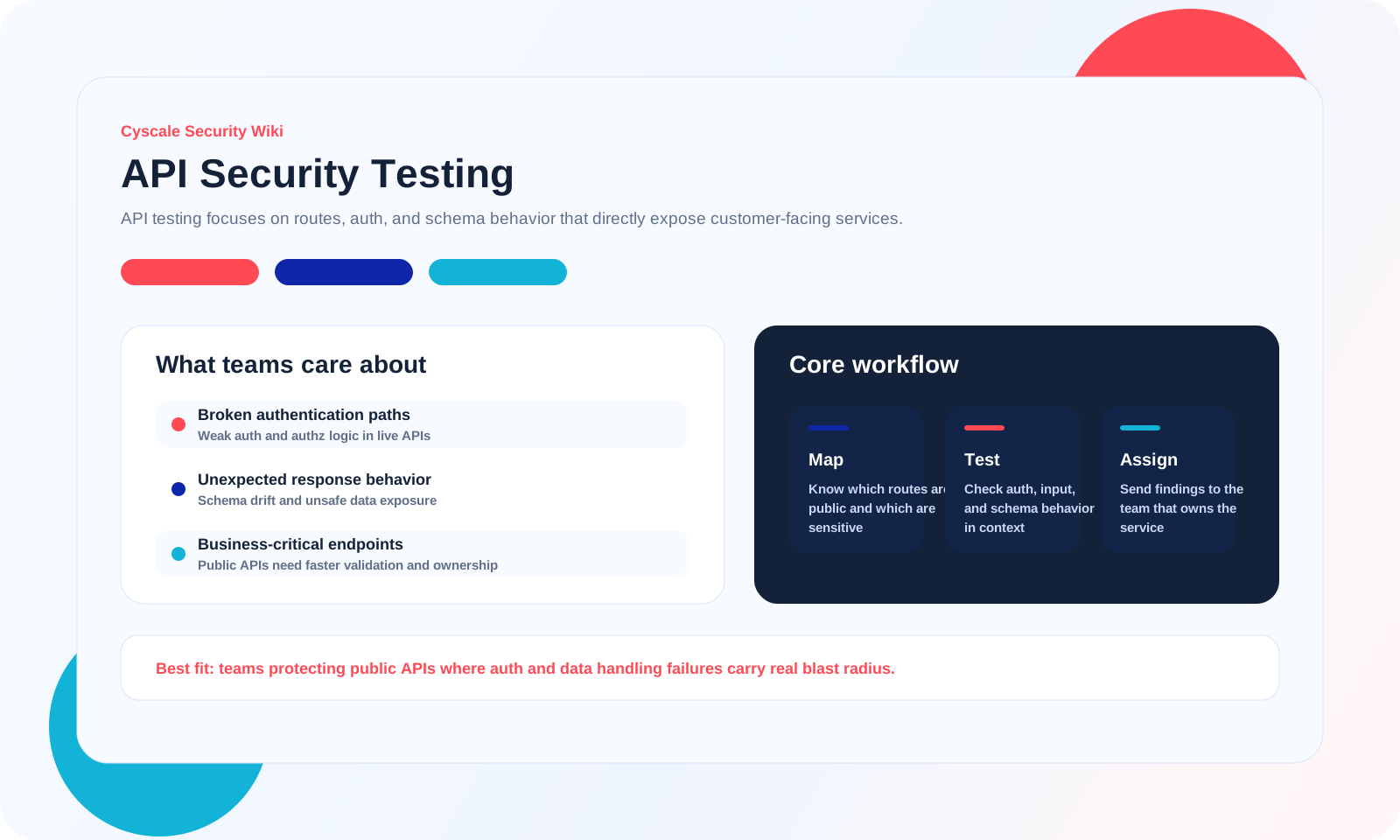
Strong API testing combines schema awareness, authentication handling, rate-limit validation, and runtime behavior analysis. Without that depth, teams miss broken object authorization, excessive data exposure, and hidden admin functionality.
Key questions to ask
- -Can the platform test REST, GraphQL, and modern token-based authentication flows?
- -Does it account for business-logic and authorization issues, not only generic injection checks?
- -Can API findings be linked to the owners, services, and cloud resources behind each endpoint?
- -Will the workflow scale as new versions, schemas, and internal APIs are introduced?
What API security testing should validate
- -Authentication and authorization paths, including object-level and function-level access control weaknesses.
- -Excessive data exposure, weak input validation, unsafe error handling, and insecure serialization in live API responses.
- -Shadow or undocumented endpoints discovered from traffic, schemas, or application behavior.
- -Abuse paths such as missing rate limits, weak token handling, and unsafe administrative operations.
Signals mature API testing programs rely on
- -OpenAPI and GraphQL schema awareness so the test scope reflects the real API surface.
- -Authenticated session handling to validate role-based access paths instead of only anonymous traffic.
- -Replay and retest workflows that prove fixes on the exact endpoints that were vulnerable.
- -Correlation with identity and cloud context so exposed API findings are prioritized by business impact.
How Cyscale operationalizes this
- -Cyscale helps teams place API findings inside a broader graph of identity, data, and cloud exposure context.
- -Security teams can evaluate which API issues affect sensitive assets or privileged operations first.
- -Engineering teams get one risk view that connects APIs with code, dependencies, and cloud services.
FAQ
Is API security testing the same as DAST?
Not exactly. API testing overlaps with DAST, but it usually needs deeper schema awareness and stronger identity modeling than traditional website scanning.
Can API gateways replace API security testing?
No. Gateways enforce controls, but they do not prove that endpoint logic, object authorization, and data handling are implemented safely.
Why are APIs hard to secure with manual review alone?
Because versioning, hidden endpoints, complex auth models, and machine-to-machine traffic create attack paths that are easy to miss without systematic testing.


