

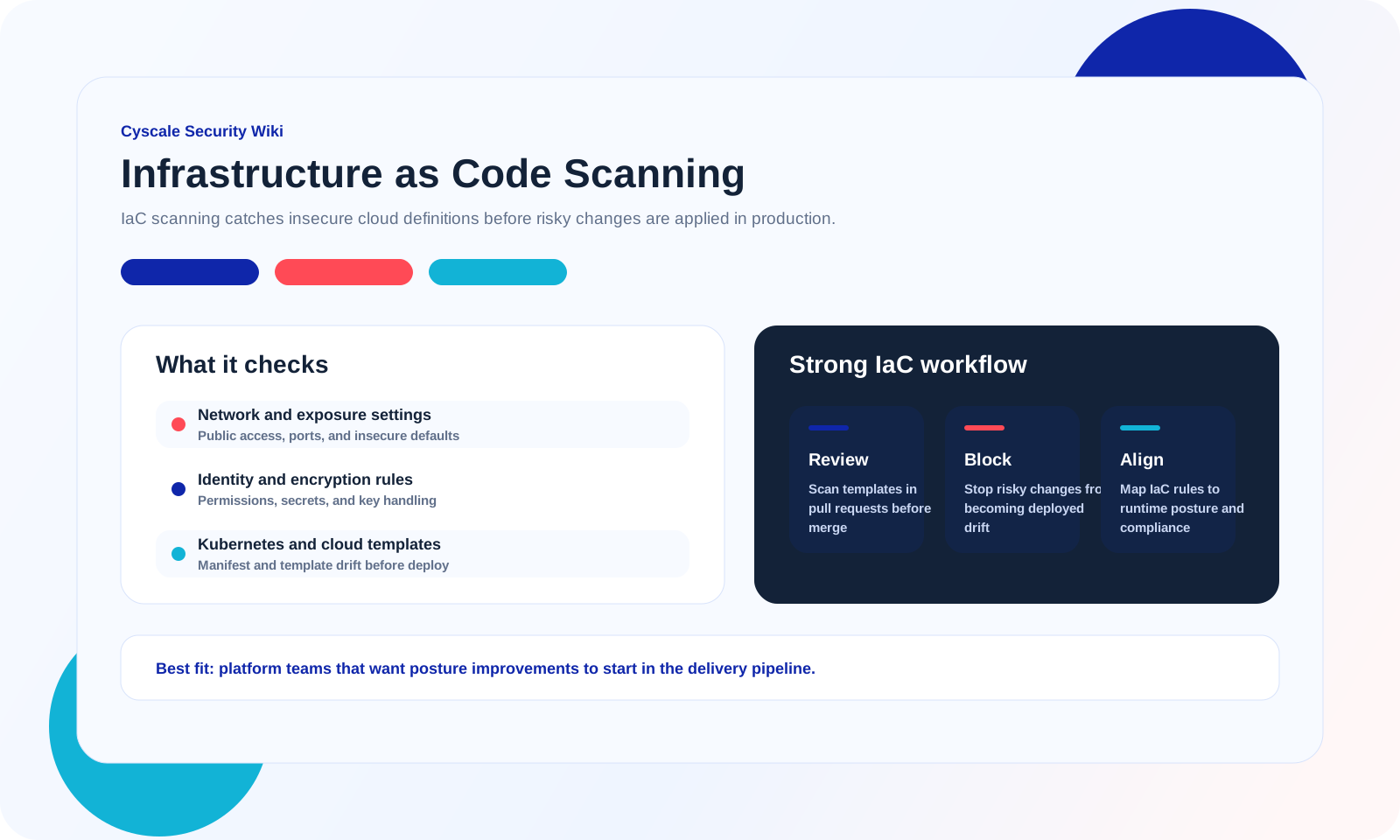
IaC scanning shifts cloud posture control earlier in the lifecycle. Instead of waiting to discover misconfigurations after deployment, teams can stop risky templates while they are still in pull requests and CI pipelines.
This matters because many cloud incidents start with preventable policy mistakes such as public exposure, excessive permissions, disabled logging, weak encryption settings, or unsafe Kubernetes defaults.
Key questions to ask
- -Can the scanner cover the template types and deployment patterns your platform teams actually use?
- -Are policy exceptions handled in a controlled, auditable way rather than through ad hoc suppression?
- -Can IaC findings be mapped to the same cloud-control framework used by CSPM after deployment?
- -Will developers receive fast, understandable feedback inside pull requests and CI jobs?
What IaC scanning should catch before deployment
- -Publicly exposed storage, databases, services, and network paths that break baseline cloud policies.
- -Excessive permissions, missing encryption, logging gaps, and drift from required security controls.
- -Unsafe Kubernetes workload settings such as privileged containers, overly broad capabilities, and missing resource or network protections.
- -Template anti-patterns across Terraform, Kubernetes manifests, Helm, CloudFormation, ARM, and related infrastructure definitions.
Common open-source scanners in this category
- -AppThreat bundles Checkov and TFSec for IaC policy analysis across major cloud templates and Terraform code.
- -For Kubernetes-focused checks, bundled tooling includes Kubesec and Kube-score to review workload and manifest security posture.
- -Yamllint and Ansible-lint help catch structural and automation issues that can break security expectations before deployment.
- -The best programs correlate pre-deployment IaC findings with live CSPM results so teams can measure prevention quality over time.
How Cyscale operationalizes this
- -Cyscale helps teams connect preventive IaC checks with live cloud posture validation in one workflow.
- -Security teams can see whether recurring runtime misconfigurations should be pushed left into template policy controls.
- -Engineering teams get clearer policy guidance tied to real cloud risk and remediation outcomes.
FAQ
Is IaC scanning enough without CSPM?
No. IaC scanning prevents many problems early, but teams still need runtime validation because not every cloud change happens through approved templates.
Can IaC scanning slow delivery teams down?
It can if policies are unclear or noisy. Well-tuned rules with actionable feedback usually speed delivery by reducing rework after deployment.
Does IaC scanning apply to Kubernetes?
Yes. Kubernetes manifests, Helm charts, and other declarative configs are common IaC targets because small template mistakes can create major exposure.


