

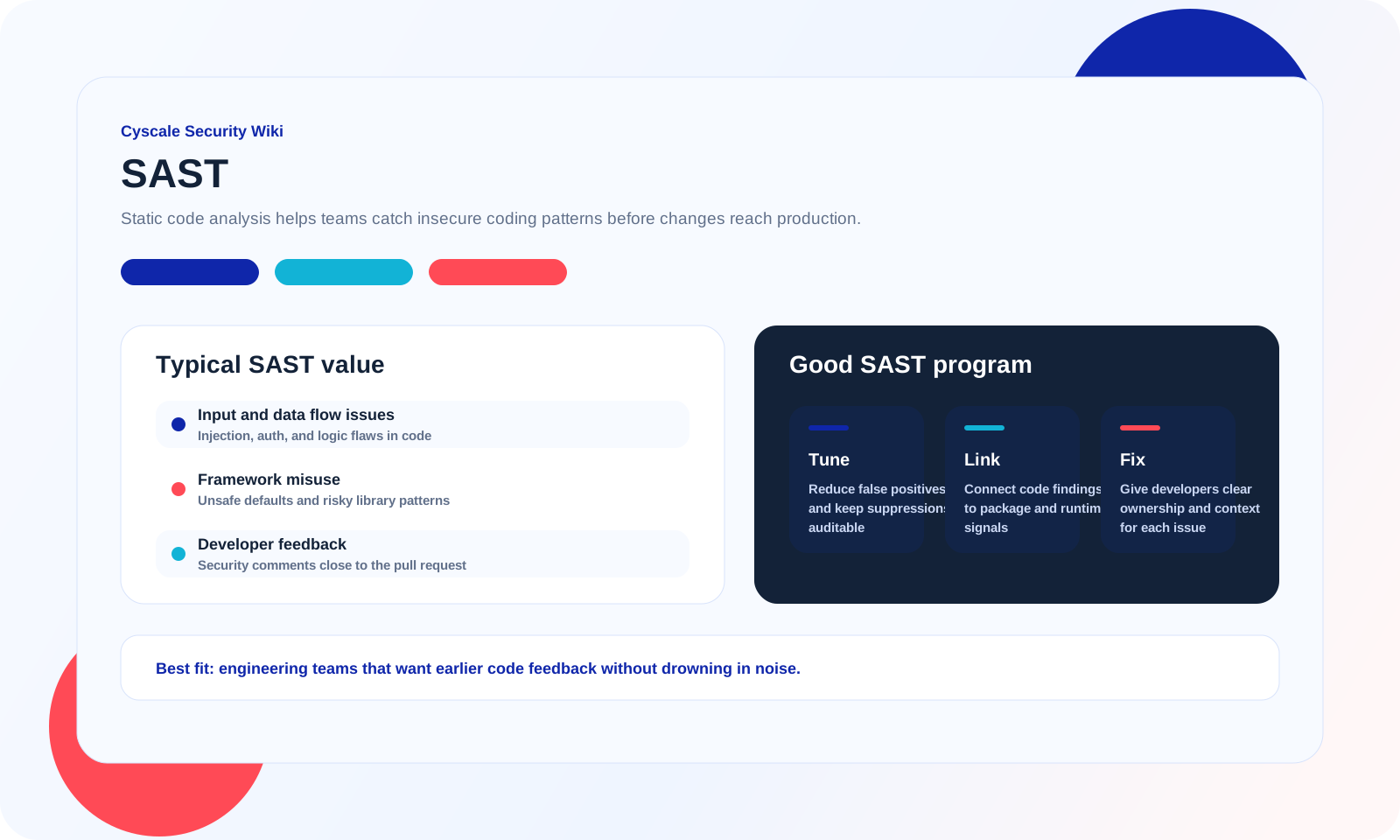
SAST is most valuable when it helps developers fix real security issues before code reaches production. It looks for patterns such as injection risks, unsafe data handling, weak cryptography usage, and insecure framework practices inside the code itself.
The challenge is signal quality. If SAST produces long, generic alert lists with little context, engineering teams stop trusting it. Mature programs tune rules, connect findings to ownership, and correlate code issues with dependency and runtime context.
Key questions to ask
- -Does the scanner support the languages, frameworks, and monorepo structure your engineering team actually uses?
- -Can teams suppress false positives cleanly and keep those decisions auditable over time?
- -Is feedback delivered inside pull requests and developer workflows, not only in a separate security console?
- -Can code findings be correlated with exposed services, vulnerable dependencies, and cloud runtime context?
What strong SAST coverage should include
- -Data-flow issues such as injection paths, insecure deserialization, server-side request forgery, and unsafe input handling.
- -Authentication, authorization, and session-management mistakes that are visible in application logic.
- -Weak cryptography usage, insecure logging, and dangerous framework defaults that become exploitable later.
- -Pull-request and branch-level feedback so issues can be fixed before they become release debt.
Common open-source scanners in this category
- -AppThreat bundles language-specific analyzers such as Bandit for Python, Gosec and Staticcheck for Go, and ShellCheck for Bash.
- -It also includes FindSecBugs and PMD for Java ecosystems, plus Detekt for Kotlin projects.
- -For PHP teams, bundled tooling includes Psalm and PHPStan to catch unsafe patterns before release.
- -Mature programs do not rely on one engine alone. They normalize results from multiple analyzers into one developer workflow.
How Cyscale operationalizes this
- -Cyscale brings code findings into a broader code-to-cloud risk model instead of leaving SAST alerts isolated in a standalone queue.
- -Engineering teams can connect static issues with package risk, secrets exposure, and runtime attack surface in one workflow.
- -Security leaders get clearer prioritization so the most meaningful code issues reach remediation faster.
FAQ
Is SAST only useful before production?
No. SAST is most effective early, but historical code findings still matter in production when they affect internet-facing or business-critical services.
Why do teams complain about SAST noise?
Poorly tuned rules, weak ownership mapping, and lack of runtime context create backlogs that developers cannot trust or prioritize well.
Does SAST replace code review?
No. SAST accelerates review and catches repeatable issues, but human reviewers still matter for business logic and architectural risk.


