

Platform
Secrets and Outdated Software
Cyscale helps teams find leaked secrets and outdated software, understand where those issues affect live cloud environments, and remediate hidden risk before it turns into an incident.
- Detect credential exposure across code, artifacts, and delivery workflows.
- Track unsupported software where it actually runs.
- Prioritize hidden risks by cloud context and service importance.
Operational risk view
Reduce hidden attack surface across code and cloud

Connect credential exposure and unsupported software to the services, identities, and owners they affect so cleanup becomes deliberate instead of reactive.
Hidden risk surfaced
across repositories, artifacts, workloads, and cloud identities that still matter in production
Cleaner triage
when credential leaks and outdated software are evaluated by live exposure and service importance
Faster cleanup
for rotation, revocation, upgrades, and ownership-based remediation workflows
What Cyscale helps you do
Secrets and unsupported software rarely stay isolated problems. The real issue is knowing where they still matter and which ones should be handled first.
Find exposed credentials
Identify secrets that appear across repositories, artifacts, and workflows before they become a path into cloud environments.
Track outdated and unsupported software
See where end-of-life runtimes and older software remain in live workloads, images, and services.
Prioritize hidden attack surface
Connect these findings to workloads, identities, and exposure so remediation focuses on what is practically risky.
What you should expect
What you should expect from secrets and outdated software coverage
If you want to reduce hidden risk, you should expect detection, exposure context, and clear ownership in one workflow. That is how you keep credential leaks and unsupported software from becoming incidents.
You should expect
Continuous secret visibility
Secrets should be tracked across repositories, history, pipelines, and artifacts, then assessed by whether they still affect live environments.
You should expect
Upgrade work with context
Your upgrade program should show which workloads and services are still exposed, not just where old versions exist.
With Cyscale
Target the affected workloads
Cyscale release updates added targeted controls and query views for workloads affected by specific vulnerabilities, which supports cleaner cleanup and upgrade planning.
Detection to context
See whether a secret or outdated component still matters
Secrets and unsupported software create hidden risk because teams often discover them before they understand where the exposure is still active. A leaked credential is more urgent when it still works. An outdated runtime is more urgent when it supports a public or privileged service.
Cyscale helps teams connect these findings to live workloads, service importance, and cloud identities so remediation is based on current operational reality.
- Understand whether a leaked secret is tied to active integrations or identities.
- Track unsupported software in workloads, images, and services that matter most.
- Keep cleanup decisions grounded in actual cloud exposure.
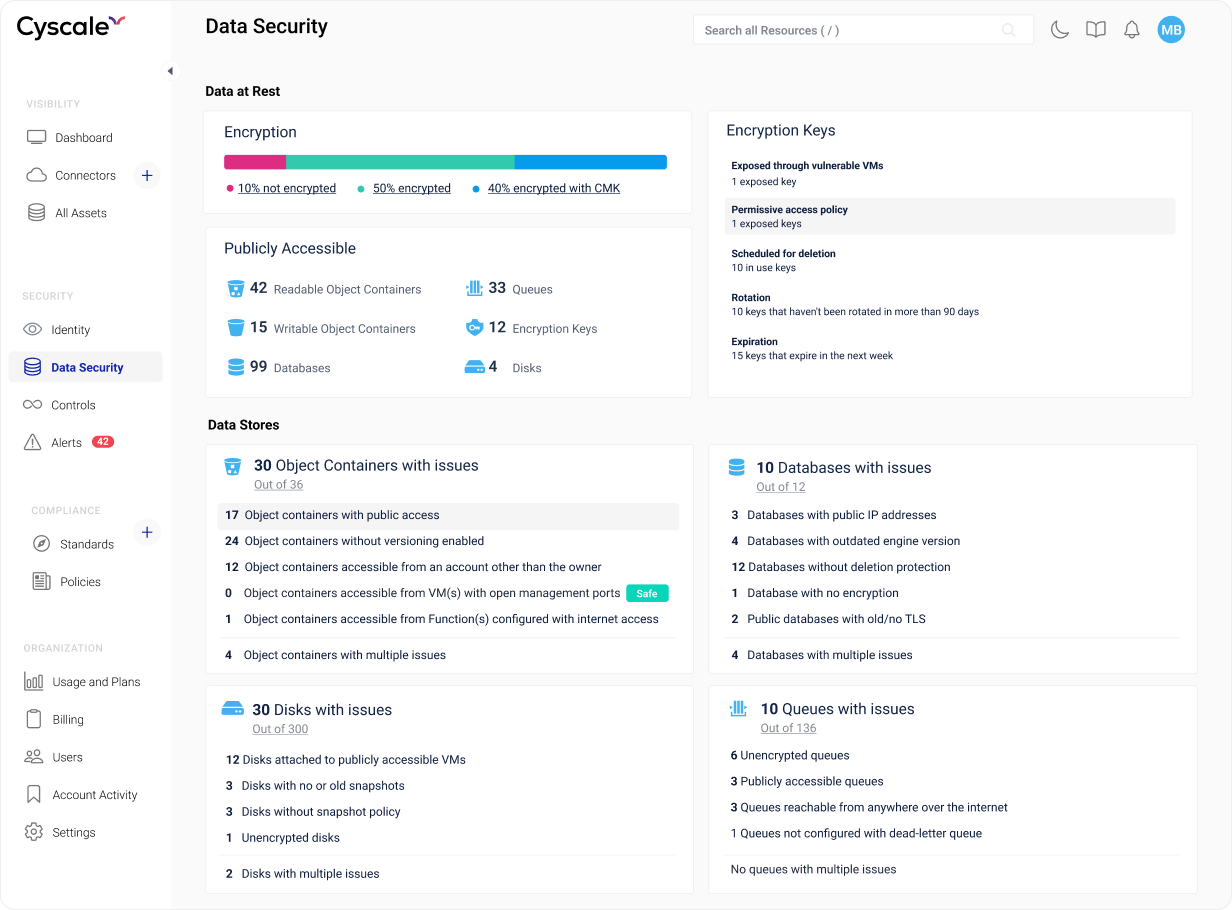
Use one operational view to understand which hidden-risk findings affect live services and which ones should move first in the cleanup plan.
Remediation
Turn hidden risk into a manageable cleanup workflow
Once teams understand where a secret or outdated runtime matters, the next challenge is moving from alert to action. That means giving engineering and platform teams enough context to rotate, revoke, upgrade, or replace the affected path quickly.
Cyscale reduces noise by showing why a finding is urgent, where it runs, and who should own the next step.
- Prioritize rotation and upgrade work by service exposure and operational impact.
- Give teams a cleaner remediation path instead of one more disconnected alert queue.
- Track cleanup progress as hidden attack surface is reduced.

Context-based prioritization helps teams spend their time on credential leaks and unsupported software that create the highest practical risk first.
How teams use Cyscale here
The workflow is simple: detect the hidden risk, understand whether it still matters, and drive the right cleanup or upgrade motion with clear ownership.
Step 1
Detect hidden-risk signals
Continuously identify credentials and unsupported software across codebases, artifacts, and live environments.
Step 2
Understand deployment impact
Connect those findings to the workloads and services where compromise or failure would matter most.
Step 3
Reduce risk deliberately
Drive credential rotation, cleanup, and upgrade planning with less noise and clearer ownership.
Related playbooks and product flows
Use these pages to connect posture findings, CVE triage, AppSec signals, and remediation workflows across the broader Cyscale platform.
FAQ
Why are secrets and outdated software grouped together?
Both create hidden attack surface that is easy to underestimate until teams understand where those issues affect live services, identities, and cloud environments.
Can Cyscale help prioritize outdated software work?
Yes. Cyscale helps teams understand where unsupported software is deployed and which services should be upgraded first based on context.
Is secret detection enough on its own?
No. Teams also need to understand where the leaked credential is used, what it can access, and how quickly it should be rotated or revoked.


